
Over 100 million people have walked through nine unmarked doors. No idols. No priests, and also no religious symbols anywhere in sight. Yet millions call Lotus Temple Delhi one of the most moving places they’ve ever visited. You’re standing before Lotus Temple, Delhi’s white marble masterpiece shaped like a flower in eternal bloom. Curious who built Lotus Temple and why Lotus Temple Delhi draws crowds from every faith?
This guide covers everything: Lotus Temple history, current Lotus Temple timings, the Lotus Temple nearest metro station, and Lotus Temple Delhi distance from major landmarks. You’ll also find the best Lotus Temple photo spots, 5 points about Lotus Temple worth knowing, and top places to visit near Lotus Temple Delhi, from the Bahá’í Lotus Temple grounds themselves to nearby icons like Jama Masjid Delhi and Akshardham.
Lotus Temple Delhi Overview
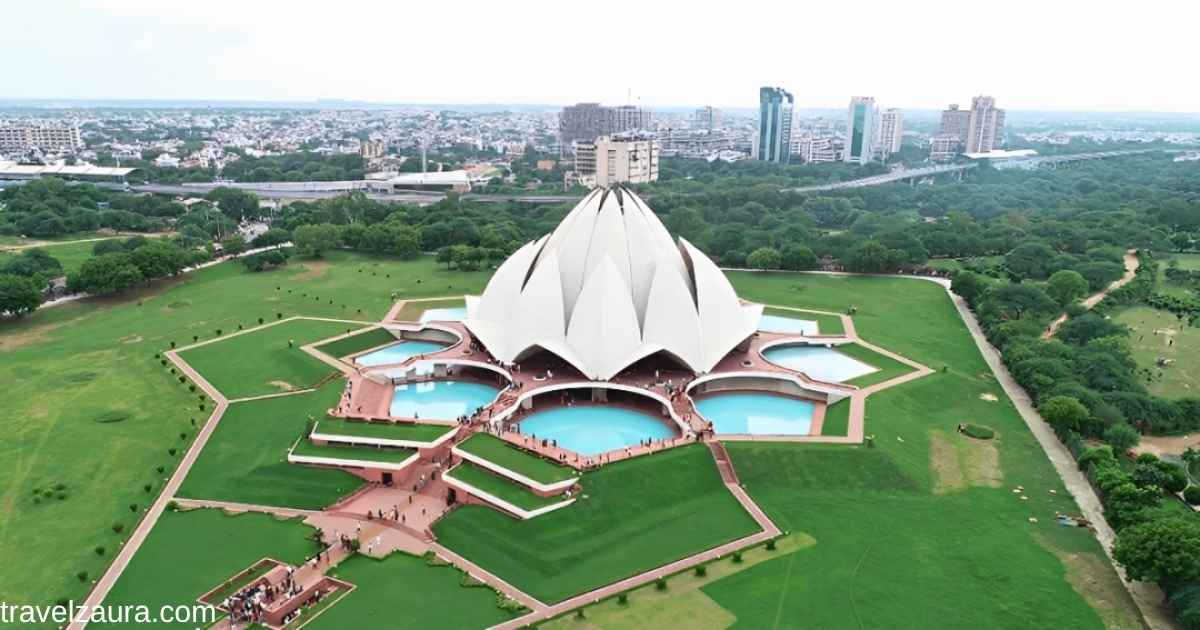
Lotus Temple Delhi stands as one of the most photographed landmarks in the capital, shaped like a blooming lotus flower rising above green lawns. It welcomes visitors from every faith, making it one of the most visited religious buildings in the world.
Located in the Kalkaji area of South Delhi, this architectural marvel offers a peaceful escape from the city’s chaos. Whether someone plans a spiritual visit or simply wants stunning Lotus Temple Delhi photos, this guide covers everything needed for a smooth trip.
Lotus Temple History
The Lotus Temple history dates back to the early 1980s, when the Baháʼí community decided to build a house of worship open to people of all religions. Construction finished in 1986, and the temple opened to the public soon after.
Since then, it has become a symbol of unity, drawing millions of visitors each year regardless of their religious background. Understanding Lotus Temple history helps visitors appreciate the deeper meaning behind its design.
Who Built Lotus Temple
Iranian architect Fariborz Sahba designed the structure, answering the question of who built Lotus Temple that many first-time visitors ask. He drew inspiration from the lotus flower, a symbol found across Hindu, Buddhist, and Jain traditions.
The construction involved engineers and workers from around the world, and the project took nearly a decade from planning to completion.
Baháʼí Faith And Lotus Temple
The Bahá’í Lotus Temple belongs to the Baháʼí Faith, a religion that teaches the unity of all people and all religions. This is why the temple has no idols, altars, or religious symbols inside.
Visitors of any faith can sit in silence, pray, or simply reflect, which makes the Bahá’í Lotus Temple genuinely inclusive.
Architecture of the Lotus Temple
Lotus Temple’s architecture blends modern engineering with natural symbolism, and it remains one of the most awarded buildings of the 20th century. The design has won multiple international architecture prizes since its completion.
Every element of the structure carries meaning, from the number of petals to the shape of the base, making it far more than a pretty building.
You May Also Visit: Jagannath Temple Bangalore: Timings, Location, Prasad Guide
27 Marble Petals Explained
The temple features 27 free-standing marble petals arranged in clusters of three, forming nine sides. These petals are made from pure white marble sourced from Greece.
The outer petals appear to open outward, while the inner ones curve inward to form the main hall, creating the lotus bloom effect visible from a distance.
Nine-Sided Design Meaning
The nine-sided design reflects the Baháʼí belief in the number nine as a symbol of unity and completeness. Nine entrances lead into the central hall, welcoming visitors from every direction.
This design choice reinforces the temple’s core message that all paths lead to one truth.
Lotus Temple Timings And Entry Fee
Lotus Temple timings vary slightly between summer and winter months, so checking the schedule before visiting saves time. Entry remains completely free, which makes it accessible for every kind of traveler.
The Lotus Temple Delhi opening time typically starts in the morning and runs until early evening, with the temple closed on Mondays for maintenance.
| Season | Timings | Entry Fee | Closed Day | Last Entry |
| Summer (Apr-Sep) | 9:00 AM – 7:00 PM | Free | Monday | 6:30 PM |
| Winter (Oct-Mar) | 9:30 AM – 5:30 PM | Free | Monday | 5:00 PM |
Visitors should double-check the timing of Lotus Temple Delhi on the official website before travel, since hours occasionally shift for public holidays.
Lotus Temple Delhi Distance And Metro
The Lotus Temple Delhi distance from major city landmarks stays fairly short, since it sits in South Delhi close to several other tourist spots. This makes it easy to combine with a half-day sightseeing plan.
Public transport connects the temple well, and the Lotus Temple nearest metro station makes the trip simple even for first-time visitors.
Nearest Metro Station
The Kalkaji Mandir metro station on the Magenta and Violet lines serves as the Lotus Temple nearest metro station, located just a short walk from the entrance. This is the most common answer to “metro station near Lotus Temple Delhi.”
Signboards near the exit guide visitors directly toward the temple gate, so navigation stays straightforward.
Distance From Connaught Place
The Lotus Temple Delhi distance from Connaught Place is roughly 10 kilometers, translating to about 30 to 40 minutes by road depending on traffic. Metro travel often proves faster during peak hours.
This central location makes the temple an easy add-on to a Delhi city tour.
By Road And Auto-Rickshaw
Auto-rickshaws and cabs remain widely available near Kalkaji, and most Delhi residents know the Lotus Temple Delhi location well. Ride-hailing apps also work reliably for this route.
Parking is available near the entrance, though weekends can get crowded due to high visitor turnout.
Best Time To Visit Lotus Temple
Early morning or late afternoon offers the most comfortable visiting experience, avoiding both the midday sun and the largest crowds. Weekdays tend to be quieter than weekends.
The winter months between October and March bring pleasant weather, ideal for spending extra time walking around the gardens and lawns.
Visitor Rules And Dress Code
Modest clothing works best, and visitors should avoid sleeveless or overly casual outfits out of respect for the space. Shoes must be removed before entering the main hall.
Silence is required inside the prayer hall, so conversations and phone calls should wait until visitors step back outside.
Photography Rules Inside Temple
Photography is allowed on the temple grounds and gardens, making it a great spot for Lotus Temple photos. However, cameras and phones cannot be used inside the main prayer hall.
Tripods and professional camera equipment may need prior permission for certain shoots.
How Much Time You Need
Most visitors spend around 1 to 1.5 hours at the temple, including time in the queue, inside the hall, and walking the gardens. Photography enthusiasts often stay longer to capture the building from different angles.
Weekday visits generally move faster than weekend crowds.
5 Interesting Facts About Lotus Temple
Here are 5 points about Lotus Temple that most visitors find surprising:
- It has welcomed over 100 million visitors since opening, making it one of the most visited buildings globally.
- The structure has no idols, priests, or religious rituals, staying true to Baháʼí principles of unity.
- It won several architecture and engineering awards, including recognition for structural innovation.
- The nine surrounding pools help cool the building naturally, reducing the need for artificial air conditioning.
- Anyone, regardless of religion, can sit inside for quiet reflection or prayer.
Lotus Temple Photos And Views
Lotus Temple Delhi photos taken from the garden pathways capture the full bloom-like structure against the sky, especially during golden hour. The reflecting pools add a mirror effect that photographers love.
Evening visits sometimes catch soft lighting on the white marble, creating some of the most striking Lotus Temple photos shared online.
Places To Visit Near Lotus Temple
Several other landmarks sit within easy reach, making it simple to plan a full day of sightseeing around South Delhi. Places to visit near Lotus Temple Delhi range from ancient monuments to other places of worship.
For travelers wanting a wider Delhi itinerary, historic sites like Jama Masjid Delhi and the more modern Akshardham temple offer contrasting experiences, though both sit further from Kalkaji and usually need separate half-day trips.
Kalkaji Temple And ISKCON Temple
Kalkaji Temple sits just a short drive away and holds deep significance for Hindu pilgrims visiting the area. ISKCON Temple, dedicated to Lord Krishna, also lies nearby and welcomes visitors with daily aarti ceremonies.
Both sites pair naturally with a Lotus Temple visit due to their proximity.
Humayun’s Tomb And Qutb Minar
Humayun’s Tomb, a UNESCO World Heritage Site, lies a short metro ride away and showcases stunning Mughal architecture. Qutb Minar, another UNESCO-listed monument, sits slightly further but remains a popular add-on for history lovers.
Frequently Asked Questions
What is special about the Lotus Temple in Delhi?
Lotus Temple Delhi stands out for its unique lotus-shaped marble structure, 27 free-standing petals, and its message of unity, welcoming visitors from every religion for quiet reflection.
Is entry to the Lotus Temple free?
Yes, entry to Lotus Temple Delhi is completely free for all visitors. No tickets or booking are required, making it accessible for tourists, families, and pilgrims alike.
Is Lotus Temple for Muslims?
Lotus Temple Delhi welcomes people of every religion, including Muslims. As a Baháʼí house of worship, it has no idols or rituals, allowing anyone to pray or reflect silently.
On which day is the Lotus Temple closed?
Lotus Temple Delhi remains closed every Monday for maintenance. Visitors should plan their trip on other weekdays or weekends to avoid disappointment upon arrival.
How much time is required to visit the Lotus Temple?
Most visitors spend around 1 to 1.5 hours exploring Lotus Temple Delhi, including queue time, the prayer hall, and walking through the surrounding gardens and pools.
Can we wear jeans in the Lotus Temple?
Jeans are allowed at Lotus Temple Delhi as long as clothing stays modest. Sleeveless tops and overly casual outfits are discouraged out of respect for the space.
Conclusion
Lotus Temple Delhi remains a must-visit stop in South Delhi, easily reached via the Lotus Temple nearest metro station, Kalkaji Mandir, just steps from the entrance. Check Lotus Temple timings before arrival, since summer and winter hours differ, and remember Mondays are closed.
Entry is free, so budget travelers can enjoy the Bahá’í Lotus Temple without extra cost. Knowing who built the Lotus Temple and its Lotus Temple history adds depth to the visit, while the 5 points about the Lotus Temple highlight why it draws millions yearly. Carry a camera for stunning Lotus Temple photos, and pair the trip with nearby places to visit near Lotus Temple Delhi, including Kalkaji Temple, ISKCON, Jama Masjid Delhi, and Akshardham.