
Imagine standing where a tree changed history forever. You can still touch that same sacred ground today. Millions travel each year searching for this exact experience.
That’s the pull of every Buddhist place of worship, a space built for silence, reflection, and awe. Whether you’re typing “buddhism place of worship near me” or dreaming of a bigger trip, India delivers both. From ancient stupas to hillside monasteries, buddhism place of worship in India cover everything from Bodh Gaya’s enlightenment site to Dharamsala’s mountain retreats.
Before you go, it helps to know the name of the Buddhist place of worship for each site, understand what a Buddhist place of worship called a vihara actually offers, and read up on the Buddhist holy book guiding these traditions. Browsing Buddhism place of worship pictures or even a simple Buddhism place of worship drawing can help you picture the journey ahead. This guide covers real Buddhism place of worship facts, a full Buddhism place of worship description, and everything tied to Buddhism place of worship and holy book traditions, so you can plan a trip that actually means something.
What Is a Buddhism Place of Worship
A Buddhism place of worship is any sacred site where followers gather to meditate, pray, and honor the teachings of the Buddha. These spaces range from grand temples to quiet forest shrines. Each one holds deep spiritual meaning for millions of practitioners worldwide.
Travelers often ask what the sacred place of worship for Buddhism is, and the answer varies by region and tradition. Whether it’s a towering pagoda in Myanmar or a humble stupa in Nepal, the purpose stays the same: inner peace and reflection.
Meaning and Spiritual Purpose
These sites exist to support meditation, merit-making, and community gathering. Monks and lay visitors alike use them to reconnect with Buddhist teachings. Many pilgrims travel across countries just to sit quietly in these spaces.
What Are Buddhist Worship Places Called
People frequently search for the name of the Buddhist place of worship, and there isn’t just one answer. Depending on the tradition and country, these sacred spaces carry different titles. Knowing them helps travelers recognize what they’re visiting.
If you’re wondering what the Buddhist place of worship is called in casual conversation, most beginners simply say “temple.” But the real terminology is far richer and tied closely to architecture and function.
Stupa, Vihara, Pagoda, and Gompa
- Stupa: A dome-shaped monument holding relics
- Vihara: A monastery or dwelling for monks
- Pagoda: A tiered tower common in East Asia
- Gompa: A Tibetan Buddhist monastery and meditation hall
Buddhism Place of Worship and Holy Book
The Buddhist place of worship and holy book share a close bond, since scripture readings often take place inside these sacred halls. Monks chant verses daily as part of temple rituals. Visitors often hear these recitations during their visit.
The Buddhist holy book, known as the Tripitaka, guides everything from ceremonies to daily monastic life. Its teachings shape how these worship spaces are used and respected.
Role of Tripitaka in Worship
The Tripitaka contains the Buddha’s discourses, monastic rules, and philosophical teachings. Monks read from it during ceremonies held at a Buddhist holy place of worship. It remains central to Theravada and Mahayana practice alike.
Design and Symbolism of Buddhist Temples
Every Buddhist place of worship follows intentional design choices rooted in symbolism. Nothing is placed by accident, from the shape of the roof to the direction of entrances. Architecture itself becomes a form of teaching.
Understanding this design helps visitors appreciate more than just the visuals. It reveals how physical space supports spiritual growth.
Five Elements in Temple Architecture
Traditional temples often represent earth, water, fire, air, and space. Stupas commonly display this through their tiered structure. Each layer carries symbolic weight tied to enlightenment.
What’s Inside a Buddhist Temple
Stepping inside a buddhism place of worship reveals a calm, structured interior built for reflection. Visitors typically find shrines, statues, and dedicated prayer areas. Every corner serves a specific ritual purpose.
First-time visitors often feel unsure of temple etiquette. Knowing what’s inside beforehand makes the experience far more meaningful.
You May Also Visit: Yadagirigutta Temple Timings Today: Your Complete Darshan Guide
Shrine, Altar, and Meditation Hall
The central shrine usually houses a Buddha statue as the focal point. Altars hold candles, incense, and offerings nearby. Meditation halls provide open, quiet space for group or solo practice.
Common Offerings and Their Meaning
- Flowers: Symbolize impermanence
- Incense: Represents purification
- Candles: Signify wisdom overcoming darkness
- Fruit: Offered as gratitude
Buddhism: Place of Worship in India
India holds some of the most significant Buddhist sites on earth, making buddhism place of worship in India a top search for spiritual travelers. This is where Buddhism itself began. Many pilgrims consider an India trip essential at least once in their lifetime.
Religion Buddhism place of worship options across India range from ancient caves to modern monasteries. Each site connects directly to Buddha’s own life story.
Table — Major Buddhist Sites in India
| Site | Location | Significance |
| Bodh Gaya | Bihar | Site of Buddha’s enlightenment |
| Sarnath | Uttar Pradesh | Buddha’s first sermon |
| Kushinagar | Uttar Pradesh | Site of Buddha’s death |
| Ajanta Caves | Maharashtra | Ancient rock-cut monasteries |
| Sanchi Stupa | Madhya Pradesh | Oldest stone structure in India |
| Dharamsala | Himachal Pradesh | Home of the Dalai Lama |
Four Holy Sites of Buddha’s Life
Buddhists worldwide recognize four locations tied directly to Buddha’s life journey. These form the backbone of most pilgrimage itineraries. Visiting all four is considered deeply meritorious.
Where do Buddhist pilgrims travel most? These four cities top nearly every list.
Lumbini, Bodh Gaya, Sarnath, Kushinagar
Lumbini in Nepal marks Buddha’s birthplace. Bodh Gaya in India is where he attained enlightenment. Sarnath hosted his first teaching, and Kushinagar is where he passed away.
Dharamsala and the Dalai Lama
Dharamsala has become a modern spiritual hub for Tibetan Buddhism. Home to the Dalai Lama, it attracts thousands of pilgrims and curious travelers each year. The town blends mountain scenery with deep religious significance.
Mahayana buddhism place of worship traditions thrive here, especially through Tibetan monasteries scattered across the hillside.
Why Pilgrims Visit Dharamsala
Visitors come for teachings, meditation retreats, and a chance to see the Dalai Lama’s residence. The town’s monasteries welcome both serious practitioners and curious tourists.
Buddhist Monasteries and the Sangha
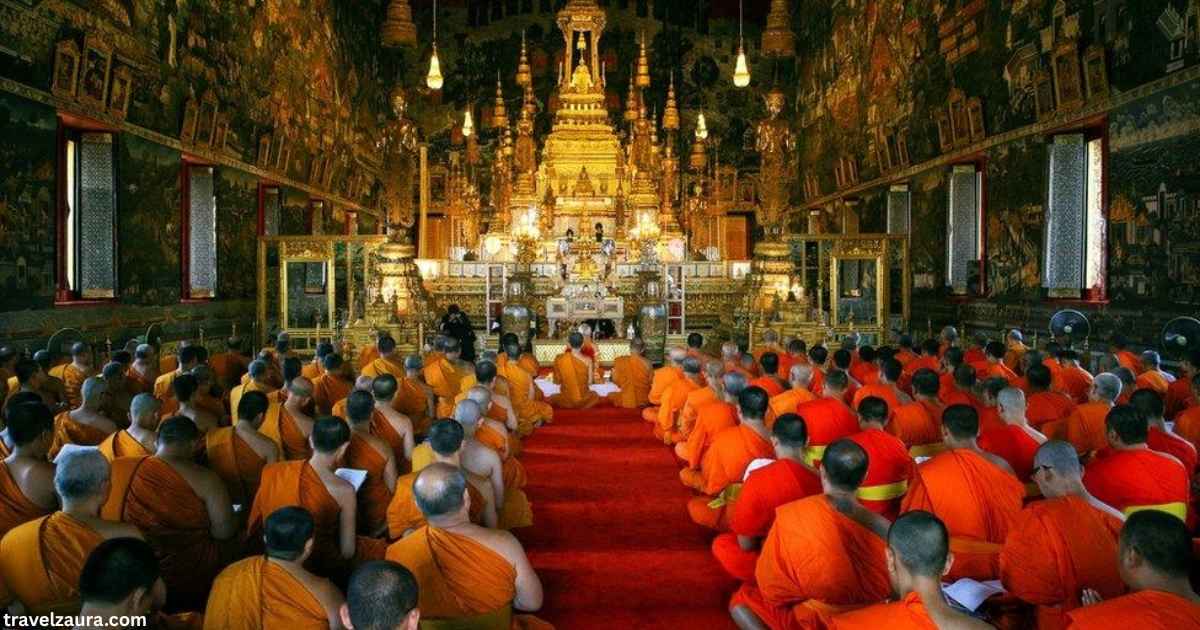
Monasteries house the Sangha, the community of monks and nuns dedicated to Buddhist practice. These spaces double as both a Buddhist place of worship and a full-time residence. Daily life here revolves around discipline and study.
Theravada Buddhism place of worship traditions, especially in Southeast Asia, place heavy emphasis on monastic life within these walls.
Life Inside a Monastery
Monks wake before dawn for meditation and chores. Meals, study, and prayer follow strict daily schedules. Visitors can often observe or join morning alms rounds respectfully.
Buddhism Place of Worship Near Me
Many travelers search for a Buddhist place of worship near me before planning international trips. Local temples and meditation centers exist in most major cities worldwide. These are great starting points before a bigger pilgrimage.
Buddhism place of worship near me searches often lead to community centers offering beginner-friendly meditation sessions.
Finding a Local Temple or Center
Search Google Maps or Buddhist community directories for nearby centers. Many welcome newcomers to introductory meditation classes. Calling ahead helps confirm visiting hours and dress codes.
Buddhism Place of Worship Pictures
Buddhism place of worship pictures help travelers plan visually before booking a trip. Photos reveal architectural details, color schemes, and scale that words can’t capture. They’re especially useful for first-time pilgrims.
Pictures of buddhism place of worship online often highlight golden stupas, prayer flags, and intricate carvings. A Buddhist place of worship drawing can also serve as a simplified reference for students learning temple layouts.
Iconic Temple and Stupa Images
Search engines and travel blogs offer galleries showing Bodh Gaya’s Mahabodhi Temple, Sanchi’s stupa, and Dharamsala’s monasteries. These images help set realistic expectations before arrival.
Best Time to Visit Buddhist Sites
October through March offers the most comfortable weather for temple visits across India and Nepal. Summer months bring intense heat, especially in Bihar and Uttar Pradesh. Winter also aligns with major Buddhist festivals.
Sample Buddhist Pilgrimage Itinerary
A well-planned route helps travelers cover major sites without exhausting themselves. Most pilgrims combine Bodh Gaya, Sarnath, and Kushinagar in a single trip. Adding Lumbini requires crossing into Nepal.
5-Day India Pilgrimage Route
- Day 1: Arrive in Bodh Gaya, visit Mahabodhi Temple
- Day 2: Explore local monasteries and meditation centers
- Day 3: Travel to Sarnath, visit Dhamek Stupa
- Day 4: Continue to Kushinagar, visit the Parinirvana Temple
- Day 5: Return journey or extend to Lumbini, Nepal
Visa Requirements for Pilgrimage Travel
Most foreign travelers need a valid tourist visa to enter India, available through e-Visa services. Nepal offers visa-on-arrival for many nationalities. Always check current requirements before booking flights.
Budget Breakdown for Pilgrimage Trip
A modest 5-day India pilgrimage typically costs between $300 and $600 per person, excluding flights. Budget guesthouses near temple towns keep accommodation costs low. Local trains and buses reduce transportation expenses significantly.
Transportation Options Between Sites
Trains connect most major Buddhist circuit cities affordably and comfortably. Private taxis offer flexibility for smaller groups. Buses remain the cheapest option for budget travelers.
Packing Guide for Temple Visits
Modest clothing covering shoulders and knees is essential at every site. Comfortable walking shoes help during long temple grounds. A light scarf works well for both sun protection and quick coverage indoors.
Local Food Near Pilgrimage Sites
Simple vegetarian thalis dominate menus near most temple towns. Bodh Gaya offers Tibetan momos alongside traditional Bihari dishes. Street food stalls near Sarnath serve affordable, filling meals.
Hidden Gems Off the Main Circuit
Nalanda’s ancient university ruins sit just an hour from Bodh Gaya and see far fewer crowds. Rajgir’s Peace Pagoda offers stunning valley views. Both make excellent day-trip additions.
Safety Tips for Pilgrimage Travelers
Carry bottled water and basic medication for stomach sensitivity. Keep photocopies of important documents separate from originals. Solo travelers should share daily itineraries with someone at home.
Buddhism Place of Worship Facts
Buddhism place of worship facts add context and depth for curious travelers. Bodh Gaya’s Bodhi Tree descends from cuttings of the original tree Buddha sat under. Sanchi Stupa predates most European stone monuments still standing today.
Buddhism’s place of worship description varies widely by country, yet all share the same goal of guiding people toward mindfulness and compassion.
Frequently Asked Questions
What are the 4 Buddhist pilgrimage sites?
The four sacred sites are Lumbini, Bodh Gaya, Sarnath, and Kushinagar. Each buddhism place of worship marks a major milestone in Buddha’s life journey.
What is Buddhism’s holy place?
Bodh Gaya in India stands as Buddhism’s holiest site. This buddhism place of worship marks where Buddha attained enlightenment beneath the sacred Bodhi Tree.
What is the most famous Buddhist temple?
The Mahabodhi Temple in Bodh Gaya remains the most famous buddhism place of worship worldwide, drawing millions of pilgrims and travelers annually for its historic significance.
What is a female monk called?
A female monk is called a bhikkhuni. She follows the same monastic discipline as monks, often residing near a buddhism place of worship or a dedicated convent.
Can the Dalai Lama marry?
No, the Dalai Lama takes monastic vows and remains celibate. He resides near Dharamsala’s buddhism place of worship, leading Tibetan Buddhism without marrying.
Conclusion
Every Buddhist place of worship offers more than sightseeing; it offers stillness. Whether you’re searching for a Buddhist place of worship near me or planning a full Buddhist place of worship in India, start with Bodh Gaya, Sarnath, and Kushinagar.
Learn the name of the Buddhist place of worship for each site you visit, from stupas to viharas, and understand what a Buddhist place of worship called a gompa truly represents. Study the Buddhist holy book, the Tripitaka, before you go. Browse Buddhism place of worship pictures and a simple Buddhism place of worship drawing to prepare visually. Pack modest clothing, book trains early, and respect temple etiquette at every Buddhist holy place of worship you enter.