
Imagine a roof that once spun on its own axis. Sounds impossible, right? Ancient Kakatiya engineers made it real. You’re about to uncover a 1000 Pillar Temple mystery few travelers ever solve. This Warangal wonder hides secrets in every carved stone. Curious about 1000 Pillar Temple history and who built it? The 1000 Pillar Temple built by King Rudra Deva in the 12th century, still stuns visitors today.
You’ll want to check 1000 Pillar Temple timings, browse jaw-dropping thousand pillar temple photos, and learn exactly 1000 Pillar Temple which god reigns within its walls. Plan your route past Ramappa Temple and Bhadrakali Temple, and discover why this thousand pillar temple deserves a spot on your travel list right now.
1000 Pillar Temple History And Built By
The 1000 Pillar Temple history traces back to the Kakatiya dynasty, one of the most powerful ruling families of medieval South India. Its intricate carvings and layout reflect the artistic peak of that era.
Today, the temple stands as a protected heritage monument and a top attraction near Warangal. Visitors come from across India to witness this rare piece of Kakatiya craftsmanship.
Built By King Rudra Deva in 1163 AD
The 1000 Pillar Temple, built by King Rudra Deva in 1163 AD, marks one of the earliest surviving Kakatiya monuments. He commissioned it as a tribute to Lord Shiva during his reign.
The construction showcases an early star-shaped platform design, a style that later Kakatiya rulers refined further. This makes it a key reference point when studying South Indian temple architecture.
Why Called Rudreshwara Swamy Temple
The temple carries the formal name Rudreshwara Swamy Temple, named after its builder, King Rudra Deva. Locals and travelers, however, commonly know it by its popular Warangal identity.
The name reflects the devotion the king held for Lord Shiva, whom he honored through this dedication. This dual naming often confuses first-time visitors searching for the site online.
Architecture And Star-Shaped Design
The temple’s star-shaped platform is one of its most striking architectural features. Every angle of the structure was planned to create a geometric harmony rarely seen in temples of that period.
This design later inspired other Kakatiya-era temples across the region. Architecture enthusiasts often visit specifically to study this pattern.
Trikutalayam: The Three Shrines Explained
The temple follows a Trikutalayam layout, meaning it houses three separate shrines within one complex. Each shrine faces a different deity, arranged around a central mandapam.
This triple-shrine design was uncommon for its time and highlights the engineering skill of Kakatiya architects. It remains one of the best-preserved examples of this layout in Telangana.
You May Also Visit: Madurai Temple Timings: Your Complete Meenakshi Temple Visit Guide
Nandi Monolith And Rock Carvings
A massive monolithic Nandi statue sits at the entrance, carved from a single block of black basalt. The rock carvings throughout the complex depict mythological scenes, floral patterns, and dancing figures.
These carvings survived centuries of weathering, offering a rare glimpse into Kakatiya-era artistry. Photography enthusiasts often spend hours capturing these details.
1000 Pillar Temple Mystery Explained
The 1000 Pillar Temple mystery centers on how the original wooden pillar roof once rotated on a central axis using a rolling-ball mechanism. Historians believe this was an early form of engineering innovation, though the mechanism no longer functions today.
Another layer of mystery involves the exact number of pillars, since scholars debate whether the structure ever literally held one thousand. This ongoing discussion adds to the temple’s intrigue for visiting history buffs.
Why The Temple Faces South
Unlike most Hindu temples that face east, this one faces south, an unusual choice in Kakatiya-era construction. Some historians link this orientation to specific astrological beliefs held by King Rudra Deva.
Others suggest it aligns with the natural terrain of the original site. Either way, this detail remains a popular talking point among visitors.
Which God Is Worshipped Here
The main deity worshipped is Lord Shiva, represented within the central shrine. The complex also honors Vishnu and Surya, making it a rare site dedicated to three major Hindu deities.
This multi-deity worship setup is part of what makes the temple religiously significant beyond its architectural value.
1000 Pillar Temple Timings Today
The 1000 Pillar Temple timings today typically run from 6:00 AM to 8:00 PM daily. Visitors should confirm current Warangal temple timings locally, since festival days may extend or shift these hours.
Morning visits tend to be quieter, giving travelers a peaceful darshan experience before the daytime crowd arrives.
Best Time To Visit Temple
The best time to visit is between October and February, when Telangana’s weather stays cool and comfortable. Early mornings during these months offer the clearest views of the carvings without harsh sunlight.
Avoid visiting during peak summer afternoons, as temperatures can climb uncomfortably high.
1000 Pillar Temple Entry Fee
Entry to the temple is free for all visitors, making it an accessible heritage stop for every budget. A small optional fee may apply for camera use during certain events.
No booking is required, so travelers can plan their visit spontaneously.
How To Reach 1000 Pillar Temple
Reaching the temple is straightforward thanks to Warangal’s well-connected transport network. Most travelers combine air, rail, and road options depending on their starting point.
By Air, Train, And Road
The nearest airport is Hyderabad’s Rajiv Gandhi International Airport, followed by a road journey to Warangal. Kazipet Railway Station serves as the closest major rail hub, with regular trains connecting to Hyderabad and other cities.
| From | To 1000 Pillar Temple | Approx. Distance |
| Hyderabad Airport | 1000 Pillar Temple | 145 km |
| Kazipet Railway Station | 1000 Pillar Temple | 6 km |
| Warangal Bus Stand | 1000 Pillar Temple | 5 km |
1000 Pillar Temple Distance Guide
Several nearby heritage sites make for an easy day-trip combination. Planning distances in advance helps travelers structure their itinerary efficiently.
| Destination | 1000 Pillar Temple Distance |
| Ramappa Temple | 70 km |
| Warangal Fort | 4 km |
| Bhadrakali Temple, Hanamkonda | 3 km |
The 1000 Pillar Temple to Ramappa Temple makes it possible to visit both UNESCO-linked sites in a single day. Similarly, the short distance to Warangal Fort allows a quick historical loop through the city.
UNESCO And ASI Heritage Status
The Archaeological Survey of India (ASI) protects this site as a nationally significant monument. While Ramappa Temple nearby holds official UNESCO World Heritage status, this Kakatiya-era landmark is often discussed alongside it due to shared historical origins.
This heritage recognition ensures ongoing conservation efforts to preserve the structure for future generations.
Festivals Celebrated At The Temple
Maha Shivaratri stands out as the biggest festival celebrated here, drawing thousands of devotees annually. The temple also observes Kartika Masam with special evening prayers and lamp lighting.
- Maha Shivaratri (major annual festival)
- Kartika Masam celebrations
- Local Kakatiya heritage festivals
Nearby Places To Visit
Beyond the temple itself, the surrounding area offers a rich mix of historical and cultural sites worth exploring.
Ramappa Temple And Warangal Fort
Ramappa Temple, a UNESCO World Heritage Site, showcases similar Kakatiya architecture and sits about 70 km away. Warangal Fort, just 4 km from the temple, features massive stone gateways and ruins from the same dynasty.
Bhadrakali Temple, Hanamkonda
Bhadrakali Temple sits only 3 km away and is dedicated to Goddess Kali. Many travelers combine a Bhadrakali Temple Warangal to 1000 Pillar Temple visit into one morning itinerary.
Local Food Near The Temple
Hanamkonda and Warangal offer authentic Telangana cuisine close to the temple grounds. Popular local options include:
- Warangal-style biryani
- Sarva Pindi (a local savory snack)
- Traditional Telangana thali meals
- Street-style chai and snacks near the temple entrance
1000 Pillar Temple Photos And Gallery
The 1000 Pillar Temple photos most commonly shared online capture the star-shaped platform, the Nandi monolith, and detailed rock carvings. Thousand Pillar Temple photos taken during early morning light tend to highlight the carvings best.
Visitors are welcome to take personal photographs throughout the complex for memories or social sharing.
Visitor Tips And Safety Guide
A little preparation goes a long way when visiting this heritage site. Keep the following in mind:
- Wear comfortable shoes for walking on uneven stone surfaces
- Carry water, especially during warmer months
- Dress modestly as this remains an active place of worship
- Domestic Indian travelers need no visa; international visitors require a standard Indian tourist visa
- Budget travelers can find comfortable stays in Warangal starting around affordable guesthouse rates, with mid-range hotels also available near the city center
1000 Pillar Temple Wikipedia Facts
According to general historical records referenced on platforms like Wikipedia, the temple was constructed in 1163 AD under King Rudra Deva of the Kakatiya dynasty. The 1000 Pillar Temple Wikipedia entry also notes its Trikutalayam design and dedication to three deities.
These documented facts help travelers understand the temple’s verified historical background before visiting.
1000 Pillar Temple Vs Other Temples
Comparing this Warangal landmark to similarly named temples elsewhere in India clears up common confusion among travelers.
Difference From Tamil Nadu Temple
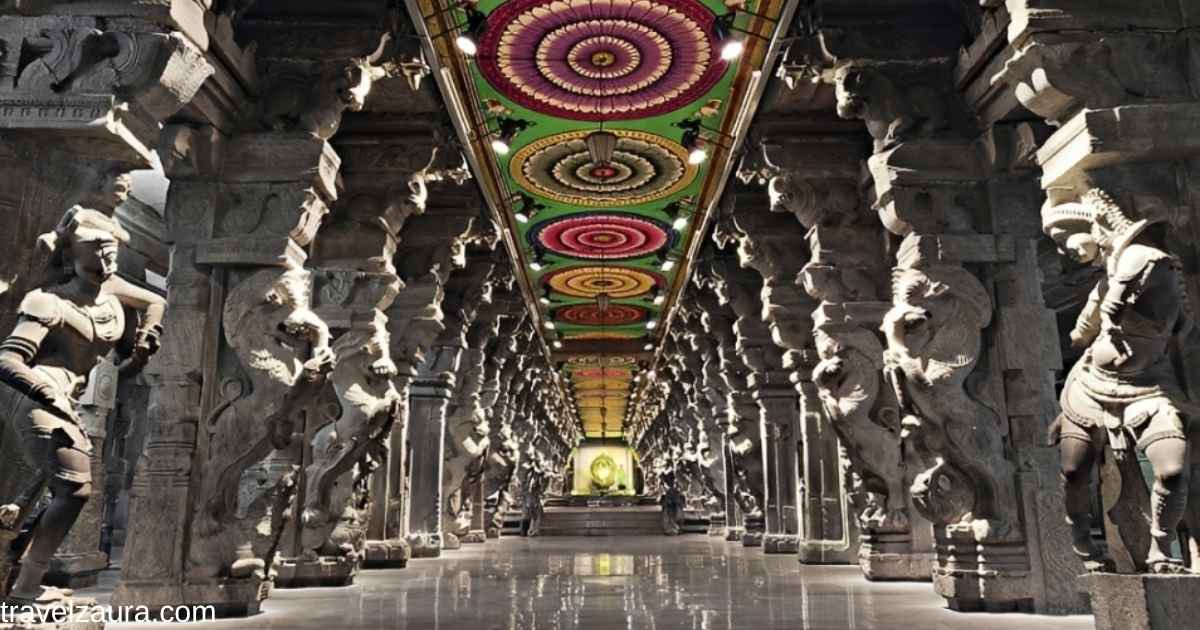
Some travelers search for the temple with a thousand pillars in Tamil Nadu, referring to the Thousand Pillar Mandapam inside the Meenakshi Amman Temple in Madurai. Unlike the standalone Warangal structure, the Tamil Nadu version functions as a hall within a larger temple complex.
Difference From Moodbidri Jain Temple
The 1000 Pillar Temple Moodbidri, located in Karnataka, is a Jain basadi rather than a Shiva temple. While both share the “thousand pillar” naming, the Moodbidri site follows Jain architectural traditions distinct from the Kakatiya Hindu style seen in Warangal.
Frequently Asked Questions
What is the history of the Thousand Pillar Temple?
The 1000 Pillar Temple traces its history to 1163 AD, built by Kakatiya King Rudra Deva as a tribute to Lord Shiva in Warangal.
What time does the 1000 Pillar Temple open?
The 1000 Pillar Temple typically opens at 6:00 AM and closes around 8:00 PM daily, though timings may extend slightly during major festivals.
Which temple has 1000 pillars?
The Hanamkonda structure in Warangal is the most well-known site carrying this name, built during the Kakatiya dynasty’s architectural golden age.
How to reach the 1000 Pillar Temple?
Travelers can reach the 1000 Pillar Temple via Hyderabad Airport, Kazipet Railway Station, or Warangal Bus Stand, all well-connected by road to the site.
Which god is there in the 1000 Pillar Temple?
The Thousand Pillar Temple primarily honors Lord Shiva, with additional shrines dedicated to Vishnu and Surya within the same Trikutalayam complex.
What is the nearest railway station to the 1000 Pillar Temple?
Kazipet Railway Station is the nearest major rail hub to the 1000 Pillar Temple, located just about 6 km from the site.
Conclusion
The Warangal Kakatiya landmark stands as one of Telangana’s finest heritage sites, built by King Rudra Deva in the 12th century. Its rich history, star-shaped design, and unsolved architectural mystery make it worth more than a quick stop.
Check 1000 Pillar Temple timings before visiting, and carry your camera for stunning thousand pillar temple photos of the Nandi monolith and carvings. Pair your trip with nearby Ramappa Temple and Bhadrakali Temple for a complete Kakatiya heritage circuit. Whether you’re tracing the 1000 Pillar Temple built by the Kakatiyas or comparing it to sites in Tamil Nadu or Moodbidri, this Warangal gem delivers authentic history, spiritual significance, and easy accessibility for every traveler.