
The Barsana-to-Vrindavan road journey is manageable as a day trip, but transport and darshan need some planning. Darshan means a visit to a temple to see and worship the deity. In Braj Bhoomi, even a short trip can take longer when roads are busy or temple hours do not match your arrival.
You can make the journey by private vehicle, taxi, local or state bus service, or shared vehicle. Your choice affects travel time, flexibility, and how much room you have for stops. You will also want to plan the temple visit around its opening hours, especially if you hope to reach Radha Rani Temple during a particular darshan window.
Use the planning sequence here to choose a way to travel, allow time for the temple approach, and avoid a rushed return. Start with the one-way distance and a realistic overall travel estimate.
Barsana to Vrindavan Distance: What Should You Expect?
The usual Barsana to Vrindavan distance by road is about 43 to 50 km, depending on your route and starting point. The shortest mapped options are about 42 to 43 km, while other road choices cover more ground.
Use 43 to 50 km as a practical planning range, not a fixed door-to-door measurement. Map results can differ because one may begin at a temple, another at a hotel, and a third at the edge of town. Small changes in the route also affect the estimate.
Plan for about 43 to 50 km by road. Your exact distance depends on where you start and which route you take.

The Vrindavan Barsana distance is the same in reverse when you return along the same roads. A different return route or a stop along the way can change the total distance for the day.
When checking a map, enter your actual pickup point and the place you plan to reach. A hotel in outer Vrindavan, for example, may produce a different barsana distance than a start near the town center. Treat the map’s estimate as a starting point for planning.
Distance alone does not set your arrival time. Road choice, traffic, and transport mode matter too, so the next step is choosing the route that fits your day.
Which Road Route Should You Take?
The NH 44 and Barsana Road option is the direct, highway-led choice; Radha Kund Road suits a devotional stop. Your best route depends on whether you value a simpler drive or extra places along the way.
Live traffic can change which route is quickest, even when a map shows only a few minutes’ difference. These estimates describe typical driving conditions, not a promise about the time on your travel day.
| Route | Approximate distance | Approximate time | Best fit |
|---|---|---|---|
| NH 44 and Barsana Road | 43.3 km | 1 hour 2 minutes | Direct highway-led drive |
| Radha Kund Road and Barsana Road | 42.1 km | 1 hour 4 minutes | Possible sacred stop at Radha Kund |
| Chhatikara and Nandgaon | About 45 km | About 1.5 hours | Scenic route with a Nandgaon stop |

The Radha Kund option can include a visit to a sacred site, but parts of the route pass through villages on narrower roads. Take extra care when meeting local traffic or stopping near busy temple areas.
Other mapped options include Radha Kund Road at about 42.1 km and 1 hour 4 minutes, and Jait-Sunrakh Road, NH 44, and Barsana Road at about 43.3 km and 1 hour 3 minutes. A route via NH 19 and NH 44 through Chhata is about 43 km and 1 hour 15 minutes.
For a longer option, the road through Chhatikara and Nandgaon covers about 45 km and takes roughly 1.5 hours. It may suit you if Nandgaon is part of the day, but it is not the quickest choice for a direct trip.
Check current traffic before leaving and follow the route that suits the conditions at that time. Once you have chosen your roads, compare how long each travel mode usually takes.
How Long Does Each Travel Mode Take?
A car or bike usually makes the journey in about 1 to 1.5 hours, while a bus or shared auto often needs 2 to 2.5 hours. Walking takes much longer and calls for a different kind of preparation.
The fastest option is not always the most practical one: your choice also depends on comfort, flexibility, and the time you need at the temple.
| Travel mode | Approximate one-way distance | Usual time | Practical note |
|---|---|---|---|
| Car or taxi | 43-50 km | 1-1.5 hours | Flexible departure and stops |
| Bike | 43-50 km | 1-1.5 hours | Road and traffic conditions matter |
| Bus or shared vehicle | 43-50 km | 2-2.5 hours | May involve a transfer or waiting |
| Walking | About 32 km by direct pilgrim path | More than 7 hours | A demanding pilgrimage, not routine transport |
These times are useful for a regular travel day, but weekends, Ekadashi, and festival congestion can stretch road travel. Build a buffer if your arrival needs to fit a specific darshan window.
The direct pilgrim path is about 32 km, and walking it takes more than seven hours. It is a demanding pilgrimage rather than a routine way to get between towns, so consider your fitness, pace, and return arrangements.
Public transport can cost less, but waiting and transfers may use a larger part of your day. If that trade-off works for you, check the bus and shared-vehicle options before setting out.
What Bus Options Connect Vrindavan and Barsana?
Buses and shared vehicles can work for budget travel, but they are less predictable than a private vehicle. Local and state bus service, along with shared transport, may be available from Vrindavan.
Do not assume a direct UPSRTC bus from Vrindavan to Barsana or a specific electric-bus service will run on your travel day. Services can vary, and you may need to connect through Mathura or change vehicles along the way.
A Vrindavan to Barsana bus can suit you if you have a flexible schedule and are comfortable asking about connections. A local bus may get you only part of the way, while a shared vehicle could leave when enough passengers are ready.
Do not plan the whole day around an unconfirmed direct service. Before you board, ask staff or the driver what the full trip involves and where you will need to change. This matters especially if you hope to return to Vrindavan the same day.
- Ask where the bus departs and which stop serves your destination.
- Confirm whether you need to change vehicles or connect through Mathura.
- Verify the last return option before starting the outward trip.
If the departure point is unclear, ask again before paying or boarding. Knowing the return option is just as important as reaching Barsana, since shared vehicles may not follow a schedule that suits your preferred departure.
Check the departure and return schedule before you commit to the bus. The next step is confirming current timings and ticket costs for the day you plan to travel.
How Can You Check Bus Timings and Ticket Costs?
A timetable you found earlier may not reflect same-day service. Exact Barsana to Vrindavan bus timings, a Vrindavan to Barsana electric bus timetable, and the Vrindavan to Barsana bus ticket price can vary by operator and operating day.
Check the bus stand or operator locally on your travel day before relying on a departure time or fare. A listed service may have a different operating pattern than the one you need for a same-day return.
Start with the outbound service. Ask where it leaves from, when it is expected to depart, and whether it goes all the way to Barsana or connects through another stop.
Next, ask about the return. Confirm the last service you can realistically catch after darshan, and leave room for delays on the road or at the temple. A one-way bus plan is not enough if you need to get back that day.
Keep a backup plan in case the bus does not fit your schedule. You might use a shared vehicle for one leg, arrange a private ride, or adjust the length of your visit rather than risk missing the return.
Once you know whether buses fit your schedule, consider the flexibility of a private car or taxi.
Is a Taxi or Private Car Better?
A private car or taxi is useful when you need to reach Barsana within a specific darshan window. It gives you control over when you leave, where you stop, and when you head back.
A private taxi round trip with temple waiting time typically costs about ₹2,200 to ₹5,000. The vehicle type, time spent waiting, and added stops affect the total.
Ask for the full terms before the trip begins. A quoted cab arrangement may cover a round trip with waiting, while another offer may charge separately for extra time or detours.
Agree on the planned waiting time at Barsana and the complete route, including any stops. A driver who understands your return plan can help you avoid confusion after the temple visit.
- Confirm whether the quoted terms cover one-way or round-trip travel.
- List the stops included in the agreed route.
- Agree on the driver’s waiting time before setting off.
Choose a private vehicle if timing, comfort, or a flexible return matters more than the lower cost of shared transport. If you are arriving by rail rather than starting in Vrindavan, first plan the station-to-road connection.
What Should You Know About the Train Journey?
The final leg to Barsana is by road, not by train, because Barsana does not have a railway station. Mathura Junction is the nearest major rail hub for Vrindavan, about 12 km from town.
From Mathura Junction, continue by road to Vrindavan or arrange onward travel toward Barsana. Your rail arrival time and road traffic will shape how long the full trip takes.
The Vrindavan to Barsana train query has no direct rail answer. You can travel by train to Mathura Junction, then use a taxi, bus, or other road transport for the rest of the journey.
Vande Bharat access depends on where you are starting and the current rail schedule. Check the timetable for your origin and destination rather than assuming a direct train to Vrindavan.
If you reach Mathura late, account for the onward road leg before deciding how much of the day to spend in Barsana. Your arrival logistics set the stage for the temple schedule and the time you should aim to reach the hill.
How Should You Plan Radha Rani Temple Darshan?
Reaching Barsana is not enough if Radha Rani Temple is between darshan windows. Work backward from the morning or evening opening you want to attend.
The approximate darshan windows are split by a midday closure, and timings can shift by season or festival. Confirm the current schedule locally before you travel.
| Season | Morning window | Evening window |
|---|---|---|
| Summer, approximate | 5:00 AM-1:30 PM | 4:30 PM-9:00 PM |
| Winter, approximate | 5:30 AM-1:00 PM | 4:00 PM-8:30 PM |
Temple entry is free. The split schedule means an arrival just after the morning closure can leave you waiting until the evening opening, so check the hours before you set off.
Allow time to park and make the climb after reaching the area. Reaching the village does not mean you are already at the temple entrance, and the final approach takes time.
For a wider timing reference, check the Mathura temples timing guide, then confirm the current Barsana schedule before travel. Festival arrangements can differ from usual hours.
Once you have chosen a darshan window and planned around the closure, prepare for the hilltop approach itself.
What Is the Climb to Radha Rani Temple Like?
Vehicles stop below the hill or at the edge of the village, leaving the uphill climb ahead. Radha Rani Temple, also called Shriji or Ladli Ji Temple, sits atop Bhanugarh Hill.
The climb involves more than 200 stone steps, and vehicles do not go up to the temple. Palki bearers are available for a fee if you cannot manage the steps.
The steps are part of the visit, so set a pace that feels manageable rather than trying to keep up with the fastest people around you. Older visitors or anyone with limited mobility can ask about a palki.
Agree on the palki fee before starting. Make sure you understand what the arrangement covers, then allow enough time for the climb and return to the vehicle.
- Wear comfortable footwear suited to stone steps.
- Carry water for the walk up and down.
- Take rest breaks as needed instead of rushing the climb.
Families can pause as often as they need, and no one has to match another visitor’s pace. Once you have prepared for the temple approach, you can consider which stops are worthwhile along the broader journey.
Which Nearby Stops Can You Add, Including Gokul?
Radha Kund and Shyam Kund can fit naturally on the Radha Kund route, while Gokul is a separate detour. Not every direct Vrindavan-Barsana route passes the same places.
Map the order of your stops before estimating the total distance, especially if Gokul is part of the day. The final figure depends on the route and whether you travel through Mathura.
Radha Kund and Shyam Kund are devotional stops you may be able to add when using Radha Kund Road. If you want to visit them, allow time to leave the main route, stop, and continue toward Barsana.
Gokul is not a stop on every direct Vrindavan-Barsana journey. It sits apart from that straightforward trip, so adding it can reshape the day’s route rather than simply adding a brief pause.
For the Vrindavan to Barsana Gokul distance question, enter each stop in the order you expect to visit. A map can then show the combined road journey for your chosen sequence without treating every destination as being on one route.
Choose only the places that match your available time and travel pace. From individual stops, you can move on to the best-known combinations for a wider Braj visit.
Can You Combine Barsana with Nandgaon, Govardhan, and Radha Kund?
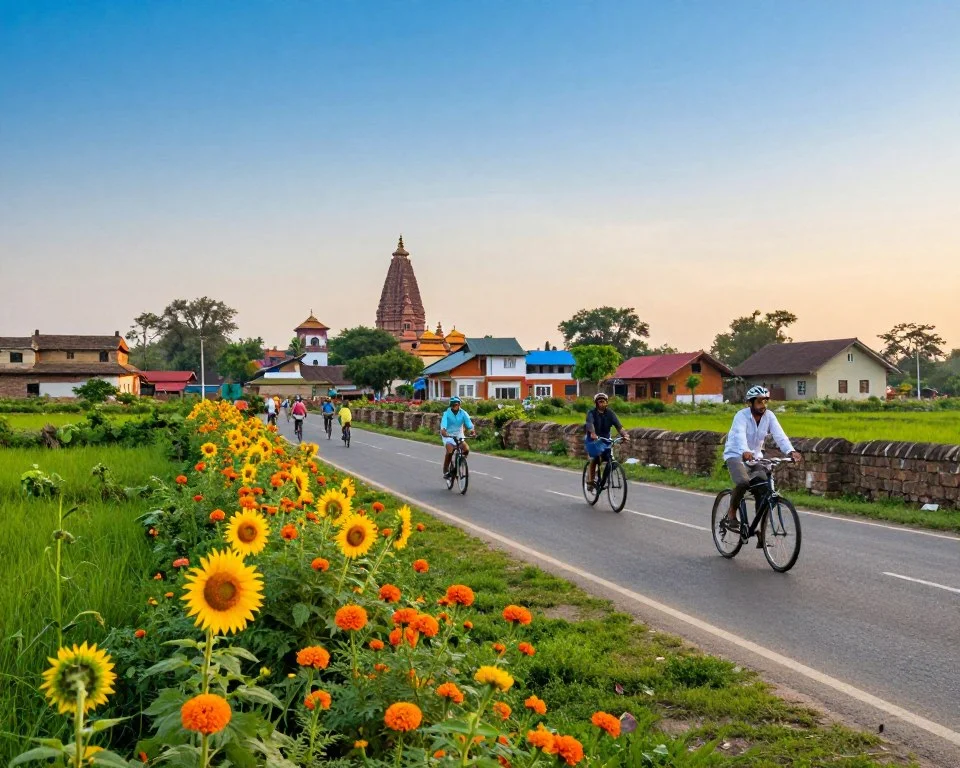
Barsana and Nandgaon make a shorter pairing, while Govardhan and Radha Kund can form a fuller western Braj day. Nandgaon is about 8 to 10 km from Barsana.
Choose a focused visit or a broader circuit based on your time and the pace of your group. Trying to cover every temple in one outing can leave little time at each place.
A Barsana-Nandgaon outing keeps the focus on two nearby places. A wider day could include Govardhan and Radha Kund, but the order of stops and time spent at each one will shape how comfortable the journey feels.
For a mathura vrindavan tour, a tour package may include several destinations in one day. Before booking, check which stops are included and how much time the plan allows at each temple.
Do not judge a package only by its list of places. A longer list can mean brief visits and more time in the vehicle, while a focused route may suit you better if you want unhurried darshan.
Consider the group’s preferred pace as well as the number of destinations. Seasonal conditions can change how easy it is to combine stops, so choose your travel date with crowds and weather in mind.
When Is the Best Time to Make the Trip?
October to March is generally the most comfortable season for the drive and climb. Major festivals bring a very different experience, with heavier crowds and road traffic.
Lathmar Holi and Radhashtami can draw large crowds, so they are rewarding times to visit but not the best choice for a quiet darshan. Early starts help in any season.
| Period | Typical conditions | Crowd or traffic consideration | Planning implication |
|---|---|---|---|
| October to March | Generally comfortable for driving and climbing | Festival dates can still be busy | Start early and allow time for stops |
| July to September | Greener and more humid | Conditions can affect travel comfort | Keep the day flexible |
| Lathmar Holi period | Holi period, generally February or March | Heavy crowds and traffic | Expect delays and plan ahead |
Lathmar Holi takes place during the Holi period, generally in February or March, and brings heavy crowds and traffic. Radhashtami is another major crowded festival period.
Festival visits can be meaningful, but moving through busy roads and temple areas may take longer than on a quieter day. If you want a calmer visit, choose another date and keep your plan simple.
October to March is often the most comfortable time for the road journey and hill climb, while July to September brings greener surroundings and more humidity. Turn from choosing a date to practical preparations for the day you have selected.
What Should You Pack and Check Before Leaving?
Before loading the vehicle, check the day’s darshan hours and make sure your departure still leaves enough time. A quick check can prevent a long wait if the temple is closed when you arrive.
Keep a return transport plan and a time buffer, especially on busy weekends and festival days. Crowd movement and delays can make a tightly scheduled return difficult.
- Confirm the day’s darshan hours before leaving.
- Check live traffic and road conditions for your route.
- Carry water and comfortable footwear for the hill.
- Keep a return transport plan and leave a buffer.
Use the same check if you are traveling by bus or shared vehicle. A return option that looks possible on paper may not leave enough time after darshan, so confirm your plan before starting the outward trip.
Festival days and busy weekends can affect both the roads and movement around the temple. Avoid scheduling your return with no room for a delayed departure or a slower climb.
With the schedule, route, and return arranged, use the checklist as the basis for a one-day plan.
How Can You Plan a One-Day Mathura Vrindavan Tour?
Leave Vrindavan early to protect time for the Barsana climb and temple visit. An early start gives you more room to manage road delays without rushing your darshan.
Plan the day around the temple visit first, then add no more than one nearby stop if time allows. The early-afternoon closure can make a late departure hard to recover from.
- Leave Vrindavan early, with your route and return transport decided.
- Travel to Barsana and leave time for traffic and arrival logistics.
- Allow time for the hill climb and darshan at Radha Rani Temple.
- Choose a direct return or one nearby stop if timing permits.
The schedule works best when you treat the temple visit as the main purpose rather than one item in a long list. A mathura vrindavan tour that adds too many places can turn into hours of driving and short visits.
Remember that the temple closes between its morning and evening windows. If you leave Vrindavan late, you could reach Barsana after the morning darshan has ended and need to wait for the evening opening.
If you want to include other Vrindavan temples, check their schedules separately. For example, the ISKCON Vrindavan darshan schedule has its own hours and should not be confused with Radha Rani Temple timings.
A focused itinerary gives you more breathing room than trying to visit every temple in one day. Families, older adults, and larger parties may need a few adjustments to the pace and transport plan.
What Should Families and Groups Consider?
The right pace matters more than squeezing in the most stops. A comfortable group plan accounts for different walking speeds, interests, and needs before setting out.
Choose transport and a visit pace that work for the least mobile person in your party. The climb can take longer for children, older adults, or anyone who needs frequent rest.
- Choose a vehicle size that fits the whole party.
- Allow extra time for children and older adults on the climb.
- Agree on shared priorities before adding more temples.
A palki may help someone who cannot manage the steps, but agree on the fee before the climb begins. Make sure the person who needs support is comfortable with the plan and knows where the group will meet afterward.
If you book a guided outing or vrindavan tour package, check what transport it includes, how long the driver waits, and which stops are part of the deal. The name of a package alone does not tell you how much time you will have at each temple.
Choose a vehicle that fits your party, then set a pace everyone can manage. More stops do not always make a better day.
Two decisions make the trip easier to manage: how you will travel and how much the group wants to fit into the day. Start by confirming the vehicle and agreeing on a realistic number of stops.
Conclusion
Match your transport plan to the darshan window you want, rather than trying to fit the temple around an uncertain arrival. A private vehicle gives you more control, while bus and shared options can work when you have flexibility.
Build time for the climb and a return journey, and keep the itinerary focused enough for your group. A nearby stop is worth adding only if it does not make the temple visit rushed.
Before you leave, check the current temple hours and live route conditions, then confirm transport for your chosen departure time.