
Picture a temple that survived an empire’s destruction. Everything around it fell to ruins. This one didn’t. You’re standing where devotees have worshipped for over 1,300 unbroken years.
That’s Virupaksha Temple Hampi, dedicated to Lord Shiva, the god this UNESCO site has honored since long before Hampi became a capital. Curious about Virupaksha Temple Hampi, built by whom, or which dynasty shaped its towering gopuram? You’ll find it here, along with current Virupaksha Temple Hampi timings, so you don’t show up to closed gates.
This guide also clears up the common mix-up around Virupaksha Temple Hampi and Pattadakal, since two temples share the name. And if you’re chasing the perfect Virupaksha Temple, Hampi photos, or planning to pair your visit with Vijaya Vittala Temple and its legendary stone chariot Hampi is famous for, everything you need starts right here.
What God Is Virupaksha Temple Dedicated To
Virupaksha Temple Hampi which god question comes up often, and the answer is Lord Shiva, worshipped here in his form as Virupaksha. The temple also honors his consort Pampa, the local river goddess linked to the Tungabhadra.
This dual dedication makes the site one of the oldest continuously active Shiva shrines in South India. Devotees still visit daily for darshan, not just as tourists exploring ruins.
Who Built Virupaksha Temple Hampi
Virupaksha Temple Hampi was built by question has layers, since the shrine grew over several centuries rather than in one phase. A small shrine existed here as early as the 7th century, long before Hampi became a royal capital.
The temple reached its grand scale under the Vijayanagara Empire, when local chieftain Lakkan Dandesha expanded it during King Krishnadevaraya’s reign in the early 1500s. Sri Virupaksha Temple Hampi still stands today largely as that expanded structure.
Which Dynasty Built Virupaksha Temple
Which dynasty built the Virupaksha Temple at Hampi?” is a common follow-up search — the Vijayanagara dynasty, specifically its Tuluva branch under Krishnadevaraya, built it. The Chalukyas and Hoysalas made earlier contributions too, and the larger complex later absorbed their smaller shrines.
Virupaksha Temple Hampi Timings
Virupaksha Temple Hampi timings run daily from around 6:30 AM to 6:30 PM, with a short midday break in some seasons. Timings can shift slightly during festivals, so it’s wise to check locally on arrival day.
Early morning visits, right after opening, offer cooler weather and fewer crowds. Evening aarti is another good time to experience the temple’s daily rhythm.
Virupaksha Temple Hampi Entry Fee
Entry to the temple itself is nominal for Indian visitors, usually a few rupees, while a small camera fee applies separately. Foreign tourists pay a higher fee, and combined ASI tickets covering nearby monuments like Vittala Temple are sold separately at the counter.
Keep small cash on hand since card payment isn’t always available at the entry counter. Prices do get revised occasionally, so confirming current rates at the gate avoids confusion.
Best Time to Visit Virupaksha Temple
October to February is the best time to visit Virupaksha Temple, thanks to cooler daytime temperatures that make walking around Hampi’s rocky terrain far more comfortable. Summer months from March to May turn punishingly hot.
Monsoon season brings green landscapes but also slippery boulder paths, so footwear matters more then. Early morning or late afternoon light also makes this window ideal for photography.
Architecture and Style of Virupaksha Temple
Virupaksha Temple in Hampi has style points clearly pointing to Dravidian temple architecture, layered with Vijayanagara-era additions. The most striking feature is the nine-tiered gopuram towering roughly 50 meters over the main entrance.
Intricate stone carvings, painted surfaces, and a sprawling pillared courtyard reflect centuries of continuous renovation. The temple complex also includes smaller shrines, a temple tank, and a covered passage leading toward the Tungabhadra River.
Ranga Mandapa and Gopuram Details
The Ranga Mandapa is a pillared hall added during Krishnadevaraya’s rule, decorated with carved scenes from Hindu mythology. Its ceiling includes an inverted-shadow effect from the main tower, a small architectural detail visitors often miss.
The gopuram itself is painted in bright colors and repainted periodically as part of temple upkeep. Climbing nearby Hemakuta Hill gives one of the best wide-angle views of this tower against the boulder landscape.
Legend of Shiva and Pampa Marriage
Local legend says the goddess Pampa performed penance here to win Lord Shiva as her husband, and people believe their divine marriage took place at this very site. This story explains why people named the region and river Pampa, a name that later evolved into Hampi.
The legend still shapes temple rituals today, including symbolic wedding ceremonies conducted during certain festivals. It also explains why the temple predates most other Hampi monuments by several centuries.
How to Reach Virupaksha Temple Hampi
Hampi connects well by road, rail, and air, though the final stretch usually involves a short local transfer. Most travelers base themselves in nearby Hospet before heading into the Hampi ruins.
Auto-rickshaws and local buses run frequently between Hospet and Hampi Bazaar, right next to the temple entrance. Renting a scooter is also popular for covering Hampi’s spread-out monument sites in one day.
Nearest Airport and Railway Station
The nearest airport is Hubli Airport, about 160 km away, while Bengaluru’s international airport offers more flight options at roughly 350 km. Hospet Junction is the nearest railway station, just 13 km from the temple, with regular trains from Bengaluru, Hyderabad, and Goa.
Time Needed to Explore the Temple
Exploring the main Virupaksha Temple complex alone takes about one to two hours at a relaxed pace. This covers the main shrine, Ranga Mandapa, temple tank, and courtyard shrines.
Most travelers pair this with a half or full day covering nearby Hampi sites like Vittala Temple and Hemakuta Hill. Rushing through in under an hour means missing smaller carved details worth noticing.
You May Also Visit: Kanipakam Temple Timings: A Complete Darshan and Travel Guide
Dress Code and Entry Rules
Modest clothing is expected since this remains an active place of worship, not just a monument. Covering shoulders and knees is the general rule for both men and women.
Footwear must be removed before entering the main shrine area, and photography inside certain inner sections may be restricted. Carrying a small bag for shoes and following posted signage keeps the visit hassle-free.
Things to Keep in Mind Before Visiting
A few practical points make the visit smoother, especially given Hampi’s heat and uneven stone pathways.
- Carry water and sun protection, since shaded spots are limited
- Wear comfortable, closed footwear for walking on rocky terrain
- Keep small cash for entry fees and local vendors
- Hire a local guide for accurate historical context
- Avoid peak afternoon hours in summer months
Virupaksha Temple Festivals and Events
The temple’s chariot festival, held around February, is the biggest annual celebration, drawing large crowds for the ceremonial procession. Karnataka usually holds the Vijaya Utsav, its state festival celebrating Hampi’s heritage, as another major event in November.
Both festivals bring extra vendors, cultural performances, and a livelier atmosphere than a regular visit. Booking accommodation early is essential if traveling during these dates.
Virupaksha Temple and Pattadakal Connection
People often confuse Virupaksha Temple in Hampi with Pattadakal, another UNESCO site in Karnataka, which has its own separate Virupaksha Temple Queen Lokamahadevi built it in the 8th century. The two temples share a name and a dedication to Shiva, but they sit roughly 150 km apart.
Both sites reflect major chapters of Karnataka’s temple architecture, one Chalukya-era and one Vijayanagara-era. Travelers researching either site should double-check which Virupaksha Temple a source is actually describing.
Nearby Places to Visit Near Temple
Hampi’s ruins spread across several kilometers, so you can easily combine most nearby attractions into one itinerary with the temple.
- Vijaya Vittala Temple, home of the stone chariot Hampi is famous for
- Hemakuta Hill for sunset views
- Matanga Hill for sunrise views
- Lotus Mahal and Elephant Stables
- Tungabhadra River ghats
Table: Temple Facts at a Glance
| Detail | Information |
| Deity | Lord Shiva (as Virupaksha) with Goddess Pampa |
| Built By | Lakkan Dandesha, under King Krishnadevaraya |
| Dynasty | Vijayanagara (Tuluva branch) |
| Architecture Style | Dravidian, with Vijayanagara additions |
| Timings | 6:30 AM to 6:30 PM daily |
| Entry Fee | Nominal for Indians, higher for foreign tourists |
| UNESCO Status | Part of Hampi’s UNESCO World Heritage Site (1986) |
Virupaksha Temple Hampi Photos
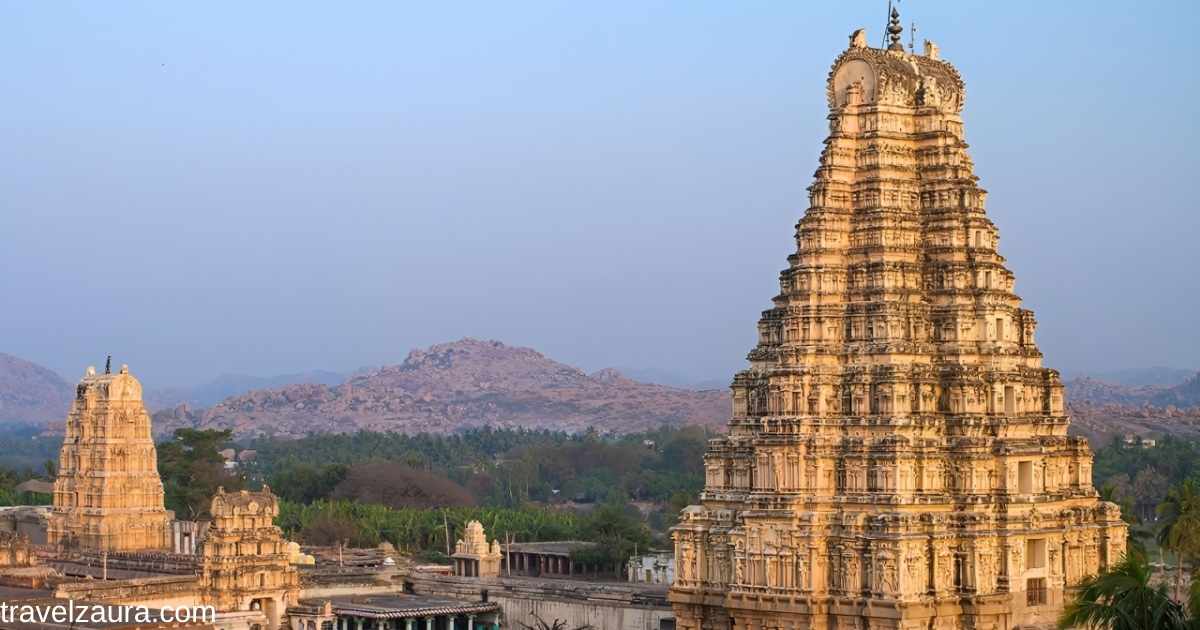
The gopuram against the boulder-strewn skyline is Hampi’s most photographed frame, especially from Hemakuta Hill at sunset. Inside the complex, the pillared Ranga Mandapa and the temple tank offer strong contrast shots of stone and water.
Photography rules apply inside certain inner shrine areas, so checking with temple staff before shooting avoids issues. Early morning light generally gives the softest, least crowded shots.
Vijaya Vittala Temple vs Virupaksha Temple
Both temples anchor Hampi’s heritage circuit, but they serve different purposes and showcase different architectural highlights.
| Aspect | Virupaksha Temple | Vijaya Vittala Temple |
| Status | Active place of worship | Preserved monument, non-active |
| Deity | Lord Shiva | Lord Vishnu (as Vittala) |
| Signature Feature | 50m gopuram tower | Stone chariot and musical pillars |
| Built By | Lakkan Dandesha, Krishnadevaraya era | Krishnadevaraya |
Visiting both in one day gives a fuller picture of Hampi’s religious and artistic range, from an active shrine to a masterfully carved but no-longer-worshipped temple.
Frequently Asked Questions
What is the speciality of Virupaksha Temple?
Virupaksha Temple Hampi is famous for its towering nine-tiered gopuram, continuous worship since ancient times, and rare shadow inversion inside the Ranga Mandapa ceiling.
Which god is present in Virupaksha Temple?
Virupaksha Temple Hampi honors Lord Shiva, worshipped here as Virupaksha, alongside his consort Goddess Pampa, the local river deity of Hampi.
What is the entry fee for the Virupaksha Temple in Hampi?
Virupaksha Temple Hampi charges a nominal entry fee for Indian visitors, a higher fee for foreign tourists, with an additional small charge for camera use.
Are there two Virupaksha temples?
Yes, besides Virupaksha Temple Hampi, another Virupaksha Temple exists at Pattadakal, built by Queen Lokamahadevi in the 8th century, roughly 150 km away.
Why is Lord Shiva called Virupaksha?
At Virupaksha Temple Hampi, devotees call Shiva “Virupaksha,” meaning “one with unusual eyes,” referring to his distinctive third eye and formless divine nature.
Why was Virupaksha Temple not destroyed?
Virupaksha Temple Hampi survived the 1565 invasion largely intact because it remained an active worship site, unlike surrounding monuments left in ruins nearby.
Conclusion
Virupaksha Temple Hampi remains Karnataka’s most vivid link to a living tradition, still active centuries after Vijayanagara’s fall. Built by Lakkan Dandesha under Krishnadevaraya, it’s dedicated to Lord Shiva, worshipped as Virupaksha alongside Goddess Pampa. Its Dravidian style, with a 50-meter gopuram, sets it apart from the nearby ruins.
Don’t confuse it with the separate Virupaksha Temple at Pattadakal, built centuries earlier by Queen Lokamahadevi. Pair your visit with Vijaya Vittala Temple and its iconic stone chariot for a full Hampi circuit. Golden-hour photos from Hemakuta Hill capture the temple best. Check current timings locally, since festival days shift the schedule.