
A 900-year-old temple inspired India’s Parliament House. You won’t find it in most guidebooks. Yet it’s real, and you can visit it today.
Ask chausath yogini temple in which state it stands, and the answer splits across Madhya Pradesh and Odisha. Start at the ruined granite shrine of Chausath Yogini Temple, Khajuraho, then head to the riverside Chausath Yogini Temple at Bedaghat, Jabalpur, followed by the hilltop Chausath Yogini Temple, Morena, at Mitaoli, whose circular design famously shaped Parliament House. Cross into Odisha, and the still-active Chausath Yogini Temple Hirapur near Bhubaneswar awaits, just off the road toward Puri. Each shrine was built by a different medieval dynasty, a fact most UPSC aspirants only skim through generic Testbook summaries. Curious which of the 64 Yogini Temples in Odisha holds the lesser-known Balangir ruins, or why Ujjain connects only loosely to this Tantra tradition? This guide answers it all, one temple at a time.
What Is a Chausath Yogini Temple
A Chausath Yogini Temple is an ancient Hindu shrine built to honor 64 yoginis, female deities linked to Tantric worship and Shakti tradition. Most of these temples share a circular, roofless design meant for open-sky rituals.
Only four such structures survive intact today, spread across two states. If you have wondered which state you can find them in, the answer covers both Madhya Pradesh and Odisha.
Chausath Yogini Temple Location by State
These shrines are not confined to one region. They sit in two states, each holding a different chapter of the same tantric tradition.
- Madhya Pradesh: Khajuraho, Bhedaghat (Jabalpur), and Mitaoli (Morena)
- Odisha: Hirapur (near Bhubaneswar) and Ranipur-Jharial (Balangir district)
4 Surviving Chausath Yogini Temples in India
If you are searching for how many Chausath Yogini temples in India remain intact, historians count four fully surviving structures. A fifth site at Ranipur-Jharial in Odisha survives too, though partially, taking the total closer to five recognized shrines.
Each temple carries its own dynasty, century, and architectural quirk, which makes comparing them the easiest way to understand the tradition.
Comparison Table: State, Builder, Century
| Temple | State | Built By | Century |
| Khajuraho | Madhya Pradesh | Chandela Dynasty | Late 9th century |
| Bhedaghat (Jabalpur) | Madhya Pradesh | Kalachuri King Yuvaraja II | Early 11th century |
| Mitaoli (Morena) | Madhya Pradesh | Kachchhapaghata King Devapala | 11th century |
| Hirapur | Odisha | Queen Hiradevi, Bhauma Dynasty | 9th century |
Chausath Yogini Temple Ujjain History
Ujjain does not host a surviving Chausath Yogini shrine, but it remains closely tied to the tantric and Shakti traditions that these temples represent. The city’s Tantra heritage often draws comparisons in travel and history circles.
Many visitors researching this topic in connection with Ujjain are actually looking for the wider Malwa region’s yogini worship history, which connects loosely to the Khajuraho and Mitaoli sites nearby.
Chausath Yogini Temple Khajuraho Ruins
The Chausath Yogini Temple in Khajuraho is the oldest structure in the entire Khajuraho complex, dated to the late 9th century under the Chandela dynasty. Unlike the circular design seen elsewhere, this one follows a rare rectangular plan.
Built entirely from coarse granite, it originally held 65 cells, of which only 35 survive today. Despite being in ruins, it remains a quiet, atmospheric stop away from the crowded main temple group.
You May Also Visit: A Complete Travel Guide to Pathala Sembu Murugan Temple
Chausath Yogini Temple Jabalpur Bedaghat
Located near the Narmada River at Bhedaghat, this shrine answers the chausath yogini temple built by question with King Yuvaraja II of the Kalachuri dynasty, dating to the early 11th century. It was later adapted into a Gauri-Shankar shrine around 1155 CE.
The Jabalpur site sits close to the famous Marble Rocks, making it easy to combine both stops on a single day trip from the city.
Chausath Yogini Temple Morena Mitaoli
Perched atop a hill near Morena, Mitaoli is arguably the most photographed of the four sites, largely because its circular design is widely believed to have inspired India’s original Parliament House.
Search interest around ekattarso mahadev mandir morena photos remains high, since this alternate name refers to the same temple, once reportedly used for astrology and mathematics instruction.
Who Built Chausath Yogini Temple Morena
An inscription dated 1323 CE credits the temple to Kachchhapaghata king Devapala, who ruled between 1055 and 1075 CE. The structure holds 64 subsidiary shrines circling a central Shiva sanctum.
- Built in the 11th century CE
- Commissioned by King Devapala of the Kachchhapaghata dynasty
- Protected as a national monument by the ASI since 1951
Chausath Yogini Temple Hirapur, Odisha
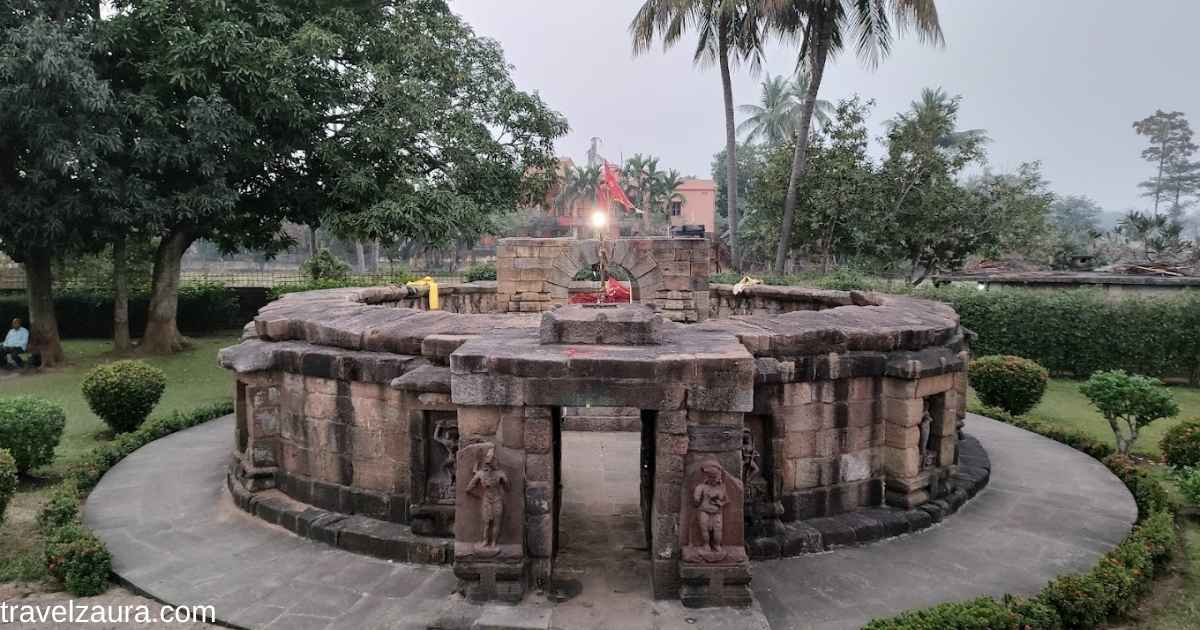
Near Bhubaneswar, the Chausath Yogini Temple, Hirapur, is the only one of the four still active for daily worship. Also called the Mahamaya Temple, it sits on the banks of the Bhargavi River.
If you are wondering where this temple is located in Odisha, Hirapur village in Khordha district is the answer, roughly 20 km from the city.
Who Built Chausath Yogini Temple Hirapur
Queen Hiradevi of the Bhauma dynasty commissioned this shrine in the 9th century CE. It remains the smallest of the four, at just 30 feet in diameter and 8 feet in height.
Rediscovered in 1953 by historian Kedarnath Mohapatra, the temple’s Hirapur photos usually highlight its narrow entrance and intricately carved yogini idols.
64 Yogini Temple Odisha District Guide
Odisha holds two yogini sites, not just one. Understanding both helps answer 64 yogini temple in odisha which district travelers usually ask about.
- Hirapur, Khordha district: the active, well-preserved shrine near Bhubaneswar
- Ranipur-Jharial, Balangir district: a 9th or 10th century site where 62 of the original 64 yogini images still survive
The Chausathi Yogini Temple site, Balangir, sits near Titilagarh, far less visited but historically significant for its sandstone construction and brick temple remains nearby.
Architecture of Chausath Yogini Temples
Every surviving shrine, except Khajuraho, follows a circular, hypaethral layout, meaning it has no roof. This design allowed open-sky worship, since yoginis were believed capable of flight.
Sandstone and granite dominate construction, with small individual cells lining the inner wall, each once holding a carved yogini figure facing a central Shiva or Devi shrine.
Why Sixty-Four Yoginis: Myth Explained
According to legend, the demon Raktabija could multiply endlessly from spilled blood. Goddess Durga released 64 yoginis to drink his blood mid-battle before it touched the ground, ending the curse.
This myth explains why the number 64 recurs across Hindu tradition, tied to sacred arts, forms of Shakti, and now, these temple complexes.
Chausath Yogini Temple Timings and Entry Fee
Most sites, including Hirapur, stay open daily from 6 AM to 7 PM with no entry fee. Mitaoli and Bhedaghat follow sunrise-to-sunset hours as Archaeological Survey of India monuments.
- Hirapur: 6 AM to 7 PM, free entry
- Mitaoli: Sunrise to sunset, free entry
- Khajuraho: Standard ASI complex hours apply
How to Reach Chausath Yogini Temple
Reaching any of these sites is straightforward once you know the nearest hub city. Bhubaneswar serves Odisha’s temples, while Gwalior and Jabalpur cover Madhya Pradesh’s shrines.
Bhubaneswar to chausath yogini temple distance runs about 20 km via the Bhubaneswar-Puri highway, making Hirapur an easy half-day trip from the capital.
By Air, Train, and Road
- Air: Bhubaneswar and Gwalior have the nearest airports for Odisha and Madhya Pradesh sites, respectively
- Train: Bhubaneswar Railway Station and Gwalior Junction connect well to major cities
- Road: Local taxis and buses cover the final stretch to each temple
Best Time to Visit Yogini Temples
October through March offers the most comfortable weather across both states, avoiding the harsh summer heat and monsoon slush. Early mornings work best for photography and quieter visits.
Winter also coincides with local festivals near Hirapur, adding cultural performances to your temple visit.
Nearby Temples and Attractions to Visit
Pairing your yogini temple visit with nearby sites makes for a fuller trip. Bhubaneswar alone has several major Kalinga-style temples worth combining with Hirapur.
- Lingaraj Temple and Mukteshwar Temple, Bhubaneswar
- Khajuraho’s Western and Eastern temple groups
- Marble Rocks, Bhedaghat
- Gwalior Fort, near Mitaoli
Visitor Tips: Photography and Etiquette
Since most shrines are open-air ruins, daylight hours give the best photo results. Carrying water and wearing comfortable footwear helps, as several sites involve short climbs or uneven stone paths.
Dress modestly and avoid touching carved idols directly, since many statues are centuries old and fragile.
Chausath Yogini Temple UPSC Facts
This topic appears regularly in UPSC and state exam current affairs, especially regarding Mitaoli’s link to Parliament House architecture. Aspirants often look up condensed summaries on platforms like Testbook before exams.
- Four fully surviving temples: Khajuraho, Bhedaghat, Mitaoli, Hirapur
- Mitaoli’s circular design reportedly inspired India’s original Parliament House
- Hirapur temple was rediscovered in 1953 by historian Kedarnath Mohapatra
- All sites reflect Tantric Shakti worship traditions
Frequently Asked Questions
Why is Chausath Yogini temple famous?
The Chausath Yogini Temple is famous for its rare tantric architecture, circular open-air design, and legendary link to India’s original Parliament House at Mitaoli.
What is the story behind the 64 Yoginis?
Legend says Goddess Durga released 64 yoginis to drink demon Raktabija’s blood mid-battle, inspiring the Chausath Yogini Temple’s dedication to these fierce protector goddesses.
Where is the Chausath Yogini Temple?
Surviving Chausath Yogini Temple sites stand in Khajuraho, Bhedaghat, and Mitaoli in Madhya Pradesh, plus Hirapur near Bhubaneswar in Odisha.
In which state is the Chausath Yogini temple located?
The Chausath Yogini Temple is located across two Indian states: Madhya Pradesh, home to Khajuraho, Bhedaghat, and Mitaoli, and Odisha’s Hirapur.
Who broke the Chausath Yogini Temple?
Historical accounts link damage at the Chausath Yogini Temple in Odisha to Kalapahad, a 16th-century general known for destroying several regional Hindu temples.
Conclusion
India’s Chausath Yogini Temple sites span two states: Madhya Pradesh and Odisha, answering the common Chausath Yogini Temple in which state query. Visit the rectangular ruins at Khajuraho, the riverside shrine at Bedaghat (Jabalpur), or the Parliament-inspiring circular structure at Mitaoli (Morena), each built by a different medieval dynasty.
In Odisha, the active shrine at Hirapur near Bhubaneswar and the partial Balangir ruins answer which 64 Yogini Temple in Odisha district travelers should prioritize. Reach Hirapur via the Bhubaneswar-Puri highway; Ujjain connects only through wider Tantra history, not a surviving site. For UPSC revision, skip generic Testbook summaries and use this firsthand Chausath Yogini Temple guide instead.