
Imagine a temple that once disappeared underwater. You can still explore its remarkable story today. Its carved stones survived one of Karnataka’s greatest transformations. The Venugopala Swamy Temple Mysore blends spirituality, history, and serene KRS backwaters. Before visiting, check the Sri Venugopala Swamy Temple Mysore Timings and Venugopala Swamy Temple Mysore Entry Fee.
Discover the Venugopala Swamy Temple, Mysore location, Sri Venugopala Swamy Temple Mysore Distance, and Mysore to Venugopala Swamy Temple Distance before setting out. You’ll also learn Venugopala Swamy Temple Mysore Which God is worshipped, its fascinating history, and why it is called the Venugopala Swamy Temple Mysore Floating Temple. Find the Best Time to Visit the Venugopala Swamy Temple in Mysore, nearby attractions, and the best spots for Venugopala Swamy Temple Photos.
Venugopala Swamy Temple Mysore Overview
The historic shrine honors Lord Krishna in his Venugopala form, portraying him as a flute-playing cowherd. After the KRS Dam submerged the original shrine at Kannambadi, restorers reconstructed the present temple.
For travelers, the temple is more than a religious attraction. Its Hoysala carvings, stonework, surrounding water views, and unusual relocation story make it a rewarding heritage excursion from Mysuru.
Venugopala Swamy Temple Location
The Venugopala Swamy Temple, Mysore location is Hosa Kannambadi, near Krishna Raja Sagara in Mandya district, Karnataka. It sits close to the KRS reservoir and is easily combined with Brindavan Gardens.
The shrine is approximately 30 km from Mysuru by road, although the exact distance varies depending on your starting point and route. Brindavan Gardens is roughly 8 to 9 km away by road.
Venugopala Swamy Temple Timings
Published schedules vary across sources, so visitors should confirm the day’s schedule locally before traveling. A commonly listed schedule is 7:00 AM to 12:00 PM and 6:00 PM to 8:30 PM.
Another travel source lists the temple as operating until around 6 PM, with Mahapooja at 9 AM and 6 PM. Festival and special पूजा schedules can differ.
Sri Venugopala Swamy Temple Mysore Timings
For planning purposes, use the following as a reference rather than a guaranteed daily timetable:
| Visit detail | Commonly reported timing |
| Morning darshan | 7:00 AM to 12:00 PM |
| Evening darshan | 6:00 PM to 8:30 PM |
| Mahapooja | Around 9:00 AM and 6:00 PM |
| Festival days | May vary |
Venugopala Swamy Temple Entry Fee
There is generally no regular entry fee reported for visiting the temple. However, special events, parking arrangements, or local practices can change, so carry some cash for incidental expenses.
The temple is primarily a religious and heritage attraction rather than a ticketed monument. Visitors should respect worship areas and follow instructions from temple staff.
Venugopala Swamy Temple History
The Sri Venugopala Swamy Temple Mysore history begins with the original shrine at Kannambadi, believed to date to the 12th century. It was constructed during the Hoysala period and featured the architectural characteristics associated with that tradition.
Its story became unusual when the KRS Dam project changed the landscape permanently. The old temple was submerged, later resurfaced when reservoir levels dropped, and eventually underwent an extensive stone-by-stone restoration.
You May Also Visit: Everything You Need to Know Before Visiting Tripura Sundari Temple
Original Temple at Kannambadi
The original temple stood in Kannambadi village before authorities created the KRS reservoir. The complex included the main shrine and other temples, which rising reservoir waters eventually submerged.
KRS Dam Submergence Story
Engineers conceived the KRS project in the early 20th century and completed the dam’s first phase around 1930, which later submerged the old village and temple complex beneath the reservoir.
Temple Restoration and Relocation
The Khoday Foundation undertook the restoration under Sri Hari Khoday. More than 16,000 photographs were reportedly taken, while individual stones were marked and carefully reassembled at Hosa Kannambadi.
Venugopala Swamy Temple Architecture
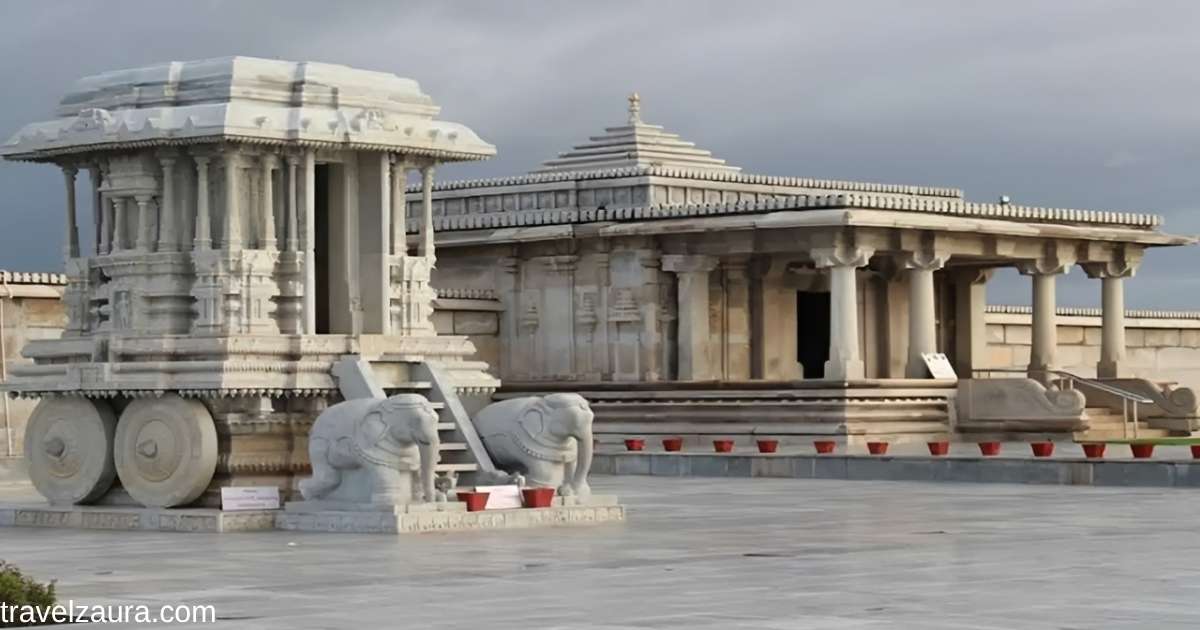
The present shrine preserves the visual character of Hoysala architecture, including carved pillars, ornamental stonework, a sanctum, mandapa, and detailed exterior decoration. Its setting beside the reservoir adds to its visual appeal.
The complex also includes smaller shrines and landscaped open spaces. Look closely at the stone surfaces because many details are easy to miss during a quick visit.
Hoysala Architecture and Carvings
Intricate carvings, ornamental pillars, and sculptural details reflect the craftsmanship associated with Hoysala temples. The temple also features representations connected with Hindu mythology and the Dasavatara tradition.
Stone Chariot and Sculptures
A stone chariot is one of the recognizable attractions around the temple complex. It provides an excellent architectural detail to examine after viewing the main shrine.
Venugopala Swamy Temple Floating Temple
The phrase venugopala swamy temple mysore floating temple refers to its striking appearance beside the KRS reservoir. The building does not literally float, but water can surround parts of the temple’s setting when the reservoir is high.
This unusual landscape is one reason photographers and heritage travelers visit the site. The temple looks especially distinctive when viewed against the broad water surface.
Why Temple Appears Underwater
The original Kannambadi temple was actually submerged by the KRS reservoir. During periods of low water, portions of the old structure could become visible again, creating the temple’s famous submerged-temple story.
KRS Backwaters Around Temple
The restored temple occupies a site close to the reservoir, while the original location lies nearby. Water views extend around the complex, particularly when reservoir levels are high.
Which God Is Worshipped Here
If you search venugopala swamy temple mysore which god, the answer is Lord Krishna, worshipped as Venugopala. The name refers to Krishna in his flute-playing cowherd form.
The main idol is associated with Krishna playing the flute. Visitors can therefore experience both the devotional importance of the shrine and its architectural heritage.
Lord Krishna as Venugopala
Venugopala represents Krishna as the divine cowherd playing his flute. This form gives the temple its name and defines its central religious identity.
Poojas and Festivals at Temple
Regular worship takes place at the shrine, although publicly listed schedules vary between sources. Visitors interested in specific rituals should confirm timings locally before making a special trip.
Krishna-related celebrations are particularly relevant here, with Janmashtami among the important festival occasions reported for the temple.
Daily Pooja and Aarti Timings
Temple authorities commonly conduct Mahapooja around 9 AM and 6 PM, but daily schedules may change.
Janmashtami and Rathotsava Celebrations
Janmashtami is associated with celebrations of Krishna’s birth and can attract more devotees. Festival-day arrangements may differ from normal visitor hours, so check locally before arrival.
Venugopala Swamy Temple Distance
The sri venugopala swamy temple mysore distance is approximately 30 km from Mysuru city by road. The journey usually takes around an hour depending on traffic and your starting point.
| Starting point | Approximate road distance |
| Mysuru city | 30 km |
| Brindavan Gardens | 8 to 9 km |
| Srirangapatna | About 22 km |
| Bengaluru | About 140 to 150 km |
Mysore to Venugopala Swamy Temple
The Mysore to Venugopala Swamy Temple distance is about 30 km. Driving is the most convenient option because the final stretch is better suited to private vehicles or taxis.
Brindavan Gardens to Temple Distance
Brindavan Gardens is approximately 8 to 9 km from the temple by road.
How to Reach Venugopala Temple
The easiest way to reach venugopala swamy temple mysore option is by private car or taxi. Public transport can be less convenient for the final section of the journey.
Plan the temple together with KRS Dam and Brindavan Gardens rather than making a separate trip from Mysuru.
By Car or Taxi
Follow the Mysuru to KRS and Brindavan Gardens route, then continue toward Hosa Kannambadi. A private vehicle gives you greater flexibility for visiting nearby attractions.
By Bus or Public Transport
For travelers searching how to reach venugopala swamy temple mysore by bus, buses can take you toward KRS, but the final connection may require a taxi or local transport. Some sources specifically recommend private transport because bus frequency near the temple can be limited.
Nearest Railway Station and Airport
Mysuru Junction is the practical railway gateway, while Mysuru Airport is the closest airport. Bengaluru Airport offers more flight choices but requires a considerably longer road journey.
Venugopala Swamy Temple Best Time
The swamy temple mysore best time to visit is generally during the cooler months, particularly from September to February. The weather is more comfortable for combining the temple with outdoor sightseeing.
Early morning and late afternoon are also preferable for comfortable exploration. Sunset can be particularly attractive because the reservoir creates an open landscape around the temple.
Best Months to Visit
September through February offers a good balance of weather and sightseeing conditions. Monsoon months can bring greener scenery but may also make road travel less predictable.
Best Time for Photography
Late afternoon is ideal for exterior architecture and backwater views. Photography rules inside the temple can be restrictive, so always follow current instructions.
Venugopala Swamy Temple Travel Tips
This is a peaceful heritage and religious destination, so visitors should plan for a relatively simple experience. Do not expect the same range of tourist facilities available in central Mysuru.
Carry essentials and allow enough time for both the temple and surrounding scenery.
Temple Rules and Dress Code
For the venugopala swamy temple mysore dress code, wear clean, modest, and comfortable clothing suitable for a Hindu temple. Avoid revealing outfits and follow instructions given at the entrance.
Photography and Mobile Restrictions
Photography and mobile-phone use may be restricted inside the temple complex. Some sources specifically report bans on photography, videography and drones.
Food, Water and Facilities
Carry drinking water because facilities around the temple are limited. Small eateries may be available in the wider area, while major restaurants and accommodation are easier to find around Mysuru, Srirangapatna and the KRS area.
Safety Tips for Visitors
Stay within designated visitor areas, especially near the reservoir. Avoid entering the water or approaching unstable banks, and be extra careful with children around the backwaters.
Venugopala Temple One-Day Itinerary
The temple works best as part of a wider KRS sightseeing day rather than as a full-day destination on its own. Start early and group attractions geographically.
A simple itinerary can cover heritage, gardens and the reservoir without rushing.
Temple and Brindavan Gardens Itinerary
Start from Mysuru in the morning, visit the temple first, then continue toward KRS Dam and Brindavan Gardens. Allow additional time for breakfast or lunch around the KRS or Srirangapatna area.
KRS Backwaters Sunset Visit
Return toward the reservoir in the late afternoon for scenic views. Check local access conditions and remain in safe public areas rather than approaching the water’s edge.
Venugopala Swamy Temple Nearby Places
The Venugopala Swamy Temple Mysore nearby places include KRS Dam, Brindavan Gardens, Srirangapatna, and several natural attractions. These destinations make the area suitable for a full-day excursion.
If you are researching places to visit near venugopala swamy temple mysore, prioritize attractions that fit naturally along your route.
KRS Dam and Brindavan Gardens
KRS Dam and Brindavan Gardens are the easiest additions because they are close to the temple. Brindavan Gardens is particularly popular for landscaped gardens and evening illumination.
Ranganathittu Bird Sanctuary
Ranganathittu is a good choice for travelers interested in birds and wetland scenery. It can be combined with Srirangapatna for a broader sightseeing day.
Srirangapatna Historical Attractions
Srirangapatna offers historical and religious attractions associated with the island town and its heritage. It is approximately 22 km from the temple by road.
Balmuri and Edmuri Falls
Balmuri and Edmuri are river-based attractions that can complement the temple’s reservoir scenery. Their appearance and water conditions vary seasonally.
Venugopala Swamy Temple Photos
Venugopala Swamy temple photos are particularly appealing when they show the carved stonework, temple entrance, stone chariot, and KRS backwaters. The contrast between heritage architecture and water is the main visual attraction.
Because photography rules may apply inside the complex, focus on permitted exterior areas and scenic viewpoints.
Venugopala Swamy Temple Visitor Guide
A practical visit requires modest preparation because the temple is outside central Mysuru. The best experience comes from combining the shrine with nearby KRS attractions.
What to Carry During Visit
- Drinking water
- Comfortable footwear
- Modest temple-appropriate clothing
- Sunglasses and sun protection
- Small cash for local expenses
- Phone or camera for permitted outdoor photography
Common Mistakes to Avoid
Do not depend entirely on online timings because published schedules differ. Also avoid assuming that public transport or ride-hailing services will always be available for the return journey.
Budget, Food and Accommodation
A day trip from Mysuru can be relatively affordable because the temple itself generally has no regular admission charge. Your main costs will be transport, meals and any additional attractions you visit.
For accommodation, staying in Mysuru gives you the widest choice of hotels, while the KRS and Srirangapatna areas offer alternatives closer to the sightseeing circuit.
| Expense | Budget estimate |
| Temple entry | Usually free |
| Local meal | ₹150 to ₹400 |
| Mysuru to temple taxi | Depends on vehicle and duration |
| Full-day private cab | Roughly ₹1,500 to ₹3,500+ |
| Hotel in Mysuru | Wide range by category |
These are planning estimates rather than fixed prices. Confirm transport, hotel and attraction charges before booking.
Pros and Cons of Visiting
The biggest advantage is the combination of history, architecture and KRS scenery in one relatively peaceful destination. It is especially suitable for heritage lovers, photographers and travelers seeking less commercial attractions.
The main drawbacks are limited facilities, uncertain public transport and inconsistent online information about opening hours. A private vehicle and advance local confirmation make the visit easier.
Pros
- Historic Hoysala-style architecture
- Unique submerged-temple story
- Beautiful KRS backwater setting
- Close to Brindavan Gardens
- Good addition to a Mysuru day trip
Cons
- Limited facilities near the temple
- Public transport can be inconvenient
- Photography restrictions may apply
- Timings reported online are inconsistent
Frequently Asked Questions
What is the history of the Venugopala Swamy Temple in Mysore?
Venugopala Swamy Temple Mysore originated as a Hoysala-era shrine at Kannambadi, later submerged by the KRS reservoir and reconstructed at Hosa Kannambadi.
How far is Venugopala Swamy Temple from Mysore?
Venugopala Swamy Temple Mysore is approximately 30 km from Mysuru city, with the journey usually taking about one hour by road.
Which god is there in Venugopala Swamy Temple, Mysore?
Venugopala Swamy Temple Mysore, is dedicated to Lord Krishna worshipped as Venugopala, the flute-playing cowherd form of Krishna.
Which is the most famous temple in Mysore?
The Mysore Palace’s Chamundeshwari Temple is among Mysuru’s most famous temples, attracting pilgrims and tourists for its religious importance and hilltop setting.
Which temple in Mysore is located near water?
Venugopala Swamy Temple Mysore stands near the KRS reservoir backwaters, making it distinctive among Mysuru-area temples for its scenic waterside setting.
What is the dress code for Venugopal temple in Mysore?
Visitors to Venugopala Swamy Temple Mysore should wear clean, modest clothing suitable for temple worship and follow any instructions from temple authorities.
Conclusion
Venugopala Swamy Temple Mysore is a rewarding heritage stop combining Hoysala architecture, Krishna worship, and scenic KRS backwaters. Check Sri Venugopala Swamy Temple Mysore Timings locally before visiting, as schedules can vary. The Venugopala Swamy Temple, Mysore location near Hosa Kannambadi makes it convenient to combine with Brindavan Gardens and KRS Dam. The Venugopala Swamy Temple, Mysore.
Best time to visit is generally September to February, especially mornings or late afternoons. Understanding the Sri Venugopala Swamy Temple, Mysore history adds depth to its submerged-temple story. Plan your route using the Sri Venugopala Swamy temple Mysore Distance, carry water, dress modestly, and enjoy permitted Venugopala Swamy temple photos responsibly.