
Did you know a temple was destroyed five times? Yet it still stands, sacred and unshaken. You are about to discover why.
The Kashi Vishwanath Temple Jyotirlinga has drawn pilgrims for centuries, standing as one of Shiva’s twelve sacred lights of the universe. This is more than a monument; it’s a living legend carved into the heart of Varanasi. From the ruins of the old Kashi Vishwanath Temple to today’s golden spires, every stone tells a story of faith surviving conquest and time. You’ll uncover the mystery behind the Kashi Vishwanath original lingam, explore breathtaking Kashi Vishwanath Temple photos, and understand the temple’s deep Kashi Vishwanath Temple significance in Hindu belief. Whether you’re planning around the Kashi Vishwanath Temple VIP ticket price for faster darshan or curious about the Kashi Vishwanath temple story in Bengali, this guide has everything you need before you go.
Who Built Kashi Vishwanath Temple
Many visitors ask who built Kashi Vishwanath Temple, since rulers and patrons rebuilt the shrine several times through history. The current structure owes its existence to one determined queen who refused to let the sacred site vanish.
Historical records confirm the temple was reconstructed multiple times after repeated demolitions. Each rebuilding effort strengthened its spiritual importance across generations of devotees.
Ahilyabai Holkar’s Reconstruction
Queen Ahilyabai Holkar of Indore rebuilt the temple in 1780 near its original site. Her version remains standing today and forms the core structure pilgrims visit.
- Built in 1780 by Ahilyabai Holkar
- Located near the original demolished site
- Golden spires added later by Maharaja Ranjit Singh in 1839
Kashi Vishwanath Jyotirlinga Explained
The temple houses one of the twelve Jyotirlingas, making it central to Shiva worship across India. Devotees consider this Jyotirlinga among the most powerful forms of Lord Shiva.
Pilgrims travel from across the world specifically to witness this sacred lingam. Its spiritual pull has made Varanasi a lifelong pilgrimage goal for millions.
Meaning of Vishwanath: Lord of the Universe
“Vishwanath” translates to “Lord of the Universe,” reflecting Shiva’s supreme status in this form. The name signifies universal protection and cosmic authority over creation.
Kashi Vishwanath Temple Story and Legend
The Kashi Vishwanath temple story is rooted in ancient scripture and mythology. Two major legends explain why this site became eternally sacred to Shiva devotees.
Communities retell these stories during festivals, shaping how pilgrims understand the temple’s spiritual significance today.
Jyotirlinga Pillar of Light Legend
Legend describes Shiva appearing as an infinite pillar of light to settle a divine dispute. This pillar became the Jyotirlinga worshipped at Kashi today.
Brahma Vishnu Dispute with Shiva
Brahma and Vishnu once argued over supremacy, prompting Shiva to manifest as the light pillar. Neither god could find its end, proving Shiva’s infinite nature.
You May Also Visit: Everything You Need to Know Before Visiting Jagdish Temple Udaipur
Old Kashi Vishwanath Temple History
The old Kashi Vishwanath Temple faced repeated destruction under various rulers over centuries. Its history reflects both religious conflict and unwavering devotion from local communities.
Archaeological evidence shows temples stood here since ancient times, long before builders raised the current structure.
Destruction Under Aurangzeb 1669
Emperor Aurangzeb ordered the temple demolished in 1669 and built the Gyanvapi Mosque nearby. This event remains one of the most documented temple destructions in Indian history.
Gyanvapi Well Wisdom Legend
Local legend claims priests hid the original lingam in the adjacent Gyanvapi well before the demolition. The well’s name itself means “well of wisdom” in Sanskrit.
Kashi Vishwanath Corridor Project
The Kashi Vishwanath Corridor, completed in 2021, connects the temple directly to the Ganges ghats. This modern redevelopment eased pilgrim movement and expanded temple facilities significantly.
Kashi Vishwanath Original Lingam
Questions about the Kashi Vishwanath original lingam remain debated among historians and devotees alike. Some believe the current lingam is the same one worshipped for centuries.
Others hold that priests safely relocated the original during periods of threat, preserving continuity of worship regardless of the temple’s physical changes.
Kashi Vishwanath Temple Significance
The Kashi Vishwanath Temple significance extends beyond religion into culture, philosophy, and daily life in Varanasi. It stands as one of the seven holiest cities (Sapta Puri) in Hinduism.
Hindus believe dying in Varanasi near this temple grants moksha, or liberation from the cycle of rebirth.
Varanasi City of Moksha
Varanasi is often called the city of moksha because of its deep association with liberation. This belief draws elderly pilgrims and families seeking spiritual closure.
Kashi Vishwanath Temple Photos
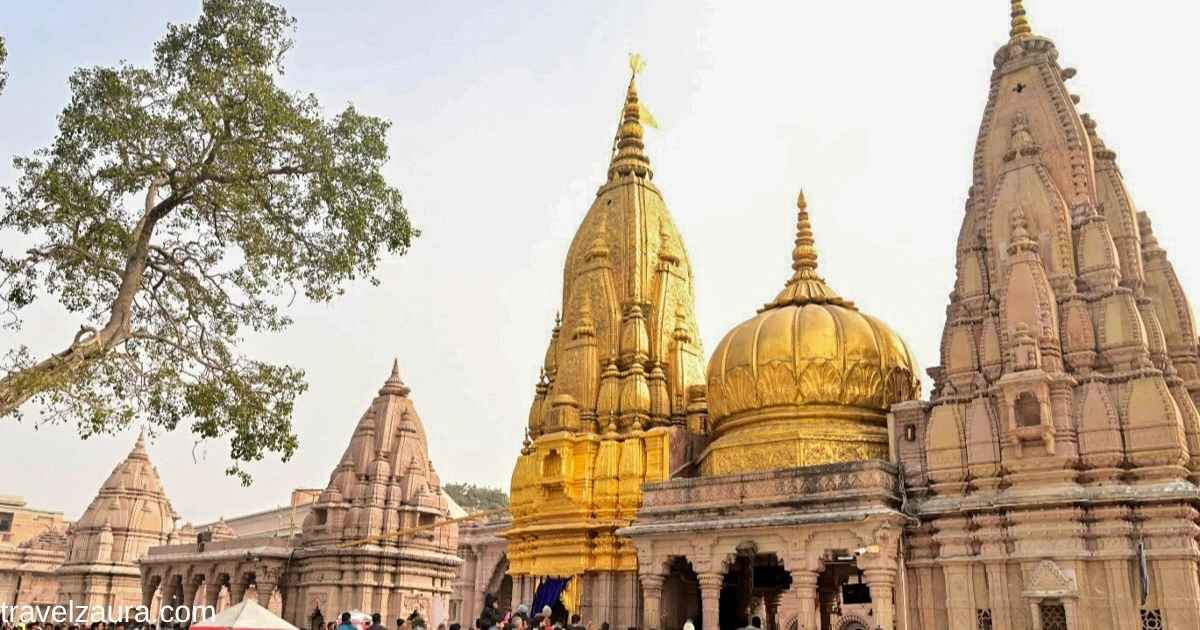
Kashi Vishwanath Temple photos capture the golden spires, the crowded ghats, and the evening Ganga Aarti. These images are widely shared across social media and travel blogs.
Temple authorities restrict photography inside the sanctum, so most visitors capture images from the corridor and surrounding courtyard areas instead.
Temple Timings and Aarti Schedule
The temple opens early and stays active through multiple daily aarti sessions. Planning around these timings helps visitors avoid the heaviest crowds.
| Aarti Name | Timing |
| Mangala Aarti | 3:00 AM – 4:00 AM |
| Bhog Aarti | 11:15 AM – 12:20 PM |
| Sandhya Aarti | 7:00 PM – 8:15 PM |
| Shringar/Bhog Aarti | 9:00 PM – 10:15 PM |
| Shayan Aarti | 10:30 PM – 11:00 PM |
Kashi Vishwanath VIP Ticket Price
The Kashi Vishwanath temple VIP ticket price allows faster darshan access without long queue waits. This option suits travelers with limited time in Varanasi.
Prices can change during festivals, so always check the official temple website before you travel.
Free VIP and Special Darshan
Free darshan remains open to all pilgrims through the general queue line. Special and VIP darshan options exist for those wanting quicker sanctum access.
| Darshan Type | Approx. Price | Access Speed |
| General Darshan | Free | Slower, long queue |
| Special Darshan | ₹300 approx | Moderate |
| VIP/Sugam Darshan | ₹500 approx | Fastest |
Best Time to Visit Temple
October to March offers the most comfortable weather for temple visits and ghat walks. Summer months bring intense heat that can make queuing uncomfortable.
Maha Shivratri draws the largest crowds of the year, so book accommodation early if visiting during this festival.
How to Reach Kashi Vishwanath
Varanasi is well connected by air, rail, and road from major Indian cities. The temple sits close to the city center, making local transport easy.
By Air, Train, and Road
Lal Bahadur Shastri Airport connects Varanasi to major domestic and international routes. Varanasi Junction railway station offers frequent trains, while road access via NH19 remains reliable year-round.
Dress Code for Sparsh Darshan
Traditional Indian attire is required for Sparsh Darshan, which allows devotees to touch the lingam directly. Men should wear dhoti-kurta, while women should wear sarees.
Western clothing, including jeans and shorts, is not permitted for this specific darshan type inside the sanctum.
Kashi Vishwanath Temple Story in Bengali
The Kashi Vishwanath temple story in Bengali holds special cultural importance, as Bengali pilgrims travel to Varanasi in large numbers each year. Many Bengali households retell this legend during religious ceremonies.
This story is also available in Hindi, Marathi, Telugu, Kannada, Tamil, and Gujarati, reflecting how deeply the legend resonates across Indian language communities. Note that Uttarkashi in Uttarakhand is a separate location and should not be confused with Varanasi’s Kashi Vishwanath Temple, though both carry Shiva’s name.
Frequently Asked Questions
What is the origin story of the Kashi Vishwanath Temple?
The Kashi Vishwanath temple story traces back to Shiva appearing as an infinite Jyotirlinga pillar of light, settling a divine dispute between Brahma and Vishnu.
Where is the hidden Shivling in Kashi?
According to the Kashi Vishwanath temple story, priests hid the original lingam inside the nearby Gyanvapi well before Aurangzeb’s 1669 demolition, preserving it from destruction.
Which ghat is cursed by Shiva?
Manikarnika Ghat carries a legend within the Kashi Vishwanath temple story where Shiva blessed the cremation site, making it auspicious rather than cursed for moksha seekers.
Can we touch Shivling in Kashi?
Yes, through Sparsh Darshan, devotees can touch the lingam directly. This ritual remains central to the Kashi Vishwanath temple story and requires traditional Indian attire.
Who destroyed the original Kashi Vishwanath temple?
Emperor Aurangzeb destroyed the temple in 1669, a pivotal event in the Kashi Vishwanath temple story, later leading Ahilyabai Holkar to rebuild it in 1780.
Conclusion
Ahilyabai Holkar answers who built the Kashi Vishwanath Temple, reconstructing it in 1780 after Aurangzeb’s demolition. The Kashi Vishwanath Temple Jyotirlinga remains one of Shiva’s twelve sacred forms, drawing millions annually. The old Kashi Vishwanath Temple history reflects centuries of destruction and devotion, while debates over the Kashi Vishwanath original lingam continue among scholars.
For Kashi Vishwanath Temple significance, remember it’s central to moksha beliefs in Varanasi. Book the Kashi Vishwanath Temple VIP ticket price option for faster darshan, or join free queues. Capture memorable Kashi Vishwanath Temple photos near the corridor. Bengali pilgrims especially cherish the Kashi Vishwanath Temple story in Bengali during festivals. Plan your visit around October to March for the best experience.