
Some stone shrines have stood longer than most nations exist. You could walk through history without even realizing it. Every carving whispers a story centuries old.
That’s the magic of exploring a famous Indian temple whose roots predate written records. From striking Indian temple architecture to sanctuaries carved straight from solid rock, this journey spans continents and centuries. An Indian temple near me search can lead straight to New Jersey’s Robbinsville complex or California’s Chino Hills community, both thriving diaspora hubs. Curious about ancient history, hunting for a downloadable PDF archive, or simply craving inspiring photos? This guide covers it all, including bringing that sacred design home with Indian temple for home decor ideas, plus a visit to the Indian temple mound museum for a different heritage story worth seeing.
Famous Indian Temples You Must Visit
India is home to thousands of temples, but a handful stand out for their scale, spiritual significance, and sheer beauty. From the gopurams of the south to the golden domes of the north, each famous Indian temple tells a different chapter of the country’s religious history.
Below is a quick snapshot of some must-visit sites, spanning different regions and traditions.
| Temple | Location | Known For |
| Meenakshi Temple | Madurai, Tamil Nadu | Dravidian towers and sculpture |
| Golden Temple | Amritsar, Punjab | Sikh worship and community kitchen |
| Jagannath Temple | Puri, Odisha | Rath Yatra festival |
| Kashi Vishwanath | Varanasi, UP | Ancient Shiva shrine |
| Somnath Temple | Gujarat | One of the 12 Jyotirlingas |
Types of Indian Temples Explained
India’s temple landscape isn’t limited to one faith. The country is home to Hindu, Jain, Sikh, and Buddhist places of worship, each with its own rituals, layout, and symbolism.
Understanding these differences helps travelers appreciate what they’re seeing rather than treating every temple visit the same way.
Hindu, Jain, Sikh and Buddhist Temples
Each tradition brings a distinct architectural and spiritual identity.
- Hindu temples: Built around a central deity, often with a sanctum (garbhagriha) and towering gopuram or shikhara.
- Jain temples: Known for intricate marble carvings, especially at sites like Dilwara in Rajasthan.
- Sikh Gurdwaras: Focused on community service, langar halls, and the Guru Granth Sahib.
- Buddhist temples: Feature stupas, prayer wheels, and meditation halls, common in Ladakh and Sikkim.
Indian Temple History and Origins
The history of India’s temples stretches back over two thousand years, evolving from simple rock shrines into elaborate stone complexes. Early structures were carved directly into hillsides before free-standing temples became common.
This long temple history reflects shifting dynasties, trade routes, and religious movements across the subcontinent. Many structures you see today were expanded over centuries by different rulers.
If you’re researching this topic academically, several universities and archaeological departments publish a downloadable Indian temple history PDF covering timelines by region and dynasty, useful for students or serious history enthusiasts.
Indian Temple Architecture Styles
Temple architecture in India isn’t uniform. Regional styles developed independently, shaped by local materials, climate, and ruling dynasties.
Broadly, scholars group Indian temple architecture into a few major schools, each with recognizable features in layout and tower design.
Dravidian vs Nagara Architecture
The two dominant styles differ significantly in structure and geography.
| Feature | Dravidian Style | Nagara Style |
| Region | South India | North India |
| Tower Shape | Pyramidal (Vimana) | Curvilinear (Shikhara) |
| Entrance | Grand gopuram gateway | Simpler entrance porch |
| Example | Brihadeeswarar Temple | Khajuraho Temples |
Ancient Indian Temples Carved From Rock
Some of the oldest and most striking sites in India are ancient temples carved directly from rock, rather than built from stacked stone. These monolithic structures showcase incredible engineering for their time.
Visiting an Indian temple carved from rock gives a very different experience than a built structure. There’s a raw, sculptural quality that modern construction simply can’t replicate.
Notable rock-cut sites include:
- Kailasa Temple, Ellora (carved from a single rock)
- Elephanta Caves, Mumbai
- Undavalli Caves, Andhra Pradesh
- Mahabalipuram Shore Temple complex
You May Also Visit: Your Complete Guide to Lakshmi Ganapathi Temple: Locations, Timings and Photos
UNESCO Heritage Indian Temples
Several temple complexes across India carry UNESCO World Heritage status, recognizing their cultural and historical importance on a global scale. These sites often receive extra conservation funding and stricter visitor guidelines.
Visiting a UNESCO-listed site adds context to your trip since most come with on-site museums or interpretation centers explaining the history in depth.
- Khajuraho Group of Monuments
- Sun Temple, Konark
- Group of Monuments at Mahabalipuram
- Great Living Chola Temples
Char Dham and Jyotirlinga Temple Circuits
For devout travelers, two pilgrimage circuits stand above the rest: Char Dham and the twelve Jyotirlingas. Both require significant planning due to remote locations and seasonal accessibility.
These circuits attract millions of pilgrims annually, so booking accommodation and transport well in advance is essential.
Char Dham covers Yamunotri, Gangotri, Kedarnath, and Badrinath. The Jyotirlinga circuit includes twelve Shiva shrines spread across states like Gujarat, Madhya Pradesh, and Andhra Pradesh.
Best Time to Visit Indian Temples
Timing your visit matters, both for weather comfort and for avoiding overcrowded festival crowds. Northern hill temples are best visited outside monsoon season, while southern temples are more visitable year-round.
Festival calendars also shift each year based on the lunar calendar, so check specific dates before booking travel.
| Region | Best Months | Avoid |
| North India (Char Dham) | May to June, Sept to Oct | Monsoon (July-Aug), Winter closure |
| South India | October to March | Peak summer (April-June) |
| Western India | November to February | Monsoon season |
Indian Temple Dress Code Guide
Most temples enforce a dress code out of respect for tradition, and enforcement varies by site. Some temples are strict about covering shoulders and legs, while others are more relaxed.
Checking the specific temple’s rules beforehand saves you from being turned away at the entrance.
Dress Code for Men and Women
General guidelines apply across most major temples:
- Men: Avoid shorts; some South Indian temples require a dhoti or wrap-around cloth.
- Women: Shoulders and knees covered; sarees, salwar suits, or long skirts are safest.
- Remove leather items like belts or wallets at certain traditional shrines.
- Footwear must always be removed before entering the sanctum.
Photography and Temple Etiquette Rules
Photography rules differ widely between temples. Some allow phone photos in outer courtyards but ban cameras entirely near the sanctum.
Beyond photography, general etiquette includes speaking quietly, not touching idols without permission, and following queue lines during peak hours.
- Check signage before taking any photos
- Never photograph priests or rituals without asking
- Avoid flash photography near idols
- Follow designated darshan queues
Entry Fees and VIP Darshan Booking
Most temples are free to enter, but larger complexes offer paid VIP darshan for faster access. This is especially common at high-traffic pilgrimage sites during festival season.
Booking VIP slots online in advance is usually cheaper and more reliable than paying on-site.
| Temple | Standard Entry | VIP Darshan Fee (approx.) |
| Tirupati Balaji | Free | ₹300 |
| Vaishno Devi | Free | Helicopter/palanquin extra |
| Golden Temple | Free | N/A (no VIP tier) |
| Somnath Temple | Free | ₹200 (special entry) |
How to Reach Famous Indian Temples
Getting to major temples usually involves a mix of flights, trains, and local transport, especially for hill or remote pilgrimage sites. Larger cities like Chennai, Varanasi, and Amritsar have direct flight connectivity.
For remote circuits like Char Dham, you’ll typically fly or train into a base city, then continue by road or on foot for the final stretch.
- By Air: Nearest major airport, then road transfer
- By Rail: Indian Railways connects most temple towns
- By Road: State buses and private taxis for last-mile access
- On Foot: Required for high-altitude shrines like Kedarnath
Indian Temple Near Me: How to Find One
For those living abroad, finding an Indian temple near me is easier than expected thanks to large diaspora communities in the US, UK, and Gulf countries. Simple Google Maps searches usually surface the nearest option quickly.
Many of these overseas temples also host cultural festivals, making them worth visiting even outside religious occasions.
Popular US-based options travelers often search for include the Indian temple in Chino Hills and other Indian temples in Chino community centers, both known for regular pujas and cultural events.
Famous Indian Temples in New Jersey
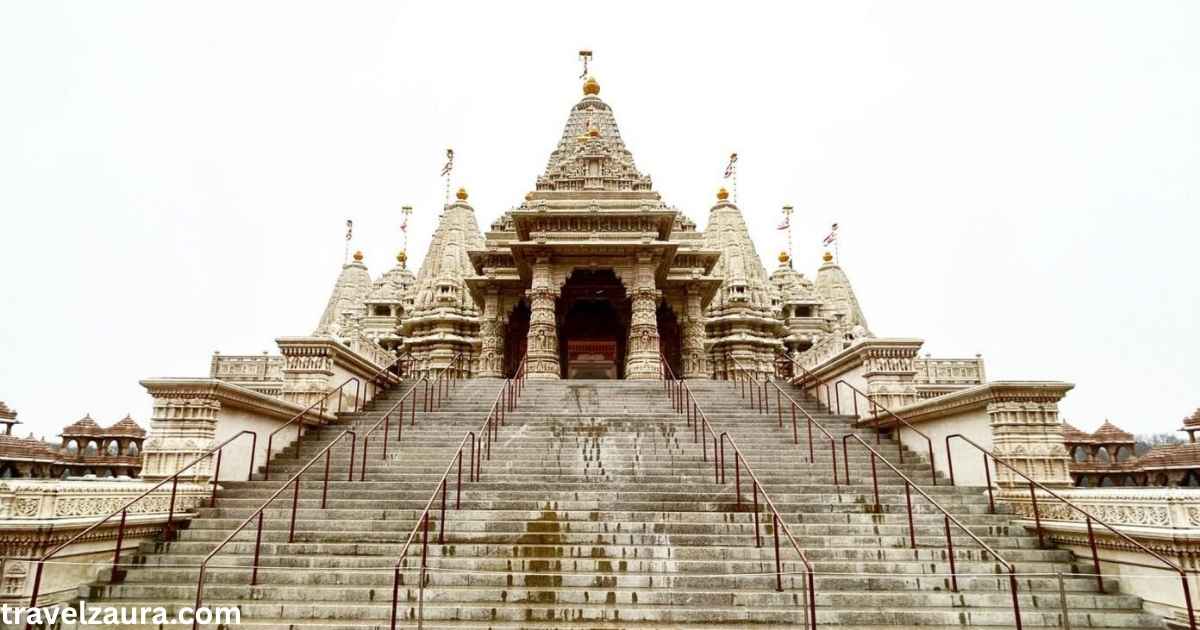
New Jersey has one of the largest Hindu populations outside India, and it shows in its temple architecture. The BAPS Swaminarayan Akshardham in Robbinsville is among the most visited Indian temple New Jersey sites in the country.
This Indian temple Robbinsville New Jersey complex is known for its hand-carved stonework, shipped and assembled by artisans using traditional techniques. It draws visitors well beyond the local Hindu community.
Indian Temple for Home Decor Ideas
Bringing temple-inspired design into your home is a growing trend, especially among the diaspora wanting to stay connected to tradition. An Indian temple for home setup can range from a small wall-mounted shrine to an entire dedicated puja room.
Popular Indian temple for home decor elements include:
- Brass or marble deity statues
- Wooden temple-style arches (mandap)
- LED diyas for low-maintenance lighting
- Bells and small copper vessels for daily rituals
Indian Temple Mound Museum Guide
Separate from Hindu temple architecture, the Indian Temple Mound Museum in Fort Walton Beach, Florida, preserves a Native American ceremonial mound built by the Fort Walton culture. It’s a different kind of “temple” heritage entirely, rooted in indigenous American history rather than Indian subcontinent traditions.
This museum is a good stop for travelers interested in comparative religious architecture and ancient ceremonial sites across cultures.
Local Food Near Indian Temples
No temple visit is complete without trying the local prasad and street food nearby. Many temple towns have food traditions built entirely around pilgrim visitors.
- Tirupati: Laddu prasadam, a signature sweet
- Puri: Mahaprasad served at Jagannath Temple
- Amritsar: Langar meal at the Golden Temple
- Madurai: South Indian thali near Meenakshi Temple
Indian Temple Photos and Visual Guide
If you’re planning a trip, browsing Indian temple photos beforehand helps set expectations for scale, crowd levels, and architectural style. Many official temple trust websites publish high-resolution galleries for this purpose.
Photos also help travelers choose which sites match their interests, whether that’s ancient rock-cut caves, towering gopurams, or minimalist gurdwara design.
Frequently Asked Questions
Which is the famous temple of India?
The Meenakshi Temple in Madurai is one of the most famous Indian temple destinations, known for its towering gopurams, intricate carvings, and centuries-old Dravidian architecture.
What is a temple called in India?
An Indian temple is generally called a “Mandir” in Hindi, though regional names vary, such as “Kovil” in Tamil Nadu and “Devasthana” in Karnataka.
Which temple is 7000 years old?
No verified Indian temple is confirmed to be 7000 years old. The Mundeshwari Devi Temple in Bihar, dating to around 625 BC, is often cited as the oldest functioning site.
Which is the top 10 biggest temples in India?
The Angkor Wat-inspired Akshardham, Srirangam Ranganathaswamy Temple, and Tirupati Balaji rank among the largest Indian temple complexes by area, alongside Meenakshi Temple and Brihadeeswarar Temple.
Which are the top 5 richest temples in India?
Padmanabhaswamy Temple, Tirupati Balaji, Shirdi Sai Baba Temple, Siddhivinayak Temple, and Jagannath Puri rank among the wealthiest Indian temple institutions based on donations and asset value.
What is the oldest temple in India?
Mundeshwari Devi Temple in Bihar is widely regarded as the oldest surviving Indian temple, with origins traced back to around 625 BC during the Gupta period.
Conclusion
From ancient rock-cut caves to modern diaspora landmarks, every Indian temple offers a distinct blend of history, architecture, and devotion. Explore famous Indian temple sites like Meenakshi, Somnath, and Kailasa for authentic architectural styles, or visit a shrine carved from rock to witness centuries-old craftsmanship firsthand. Living abroad?
Searching for an Indian temple near you connects you to community hubs like the New Jersey complex in Robbinsville, the Chino Hills location, and smaller centers in Chino. History lovers should check a detailed history PDF for deeper archives, while the Indian temple mound museum offers a fascinating Native American parallel. Bring the tradition home with temple-inspired decor and curated Indian temple photos for inspiration.