
Millions walk barefoot for hours, seeking one blessing. Could you do it too? The govardhan parikrama in km stretches across 21 sacred kilometers of devotion. You’ll pass ancient kunds, hidden temples, and centuries-old stories. Every step on this 21 km govardhan parikrama route connects you to Krishna’s timeless legend.
Starting from the govardhan parikrama starting point at Daan Ghati Mandir, you’ll trace the entire govardhan parvat distance in a sacred clockwise circle. Whether you walk the full giriraj ji parikrama distance or choose a shorter path, this yatra promises an experience unlike any other pilgrimage in India. Ready to begin?
Why Govardhan Parikrama Is Spiritually Powerful
Devotees believe circling Govardhan Parvat brings them closer to Giriraj Maharaj, the sacred hill Lord Krishna lifted to protect Braj villagers. The parikrama is considered one of the most powerful acts of devotion in Braj Bhoomi.
Pilgrims walk with faith rather than haste, often chanting through the entire route. Many say the experience feels timeless, connecting them to stories from the Dwapar Yuga.
Spiritual Benefits of the Parikrama
Walking the Govardhan Parikrama is believed to cleanse sins and strengthen devotion to Radha Rani and Krishna. Devotees often perform this yatra during Govardhan Puja, Kartik Purnima, or Guru Purnima for maximum spiritual merit.
- Purifies mind and body through devotion
- Deepens connection with Giriraj Maharaj
- Considered equal to worshipping Krishna directly
Govardhan Parikrama Distance in KM
The Govardhan Parikrama in km measures roughly 21 kilometers when walked in full. This makes it a moderate full-day activity for reasonably fit pilgrims.
Locals often refer to this distance using the older unit “kos,” where seven kos equals the total parikrama length. Understanding this Govardhan Parikrama distance helps you plan time, footwear and hydration properly.
Total Distance – 21 KM (7 Kos)
The full Govardhan Parikrama 21 km route circles the entire hill in a clockwise direction, known as Pradakshina. This complete circuit is the traditional and most spiritually significant version of the yatra.
Distance Table — Full, Badi, Chhoti Route
| Route Type | Distance | Ideal For |
| Full Parikrama | 21 km | Devoted pilgrims, first-timers wanting a complete experience |
| Badi Parikrama (Outer) | 12 km | Those wanting the major temple stops |
| Chhoti Parikrama (Inner) | 9 km | Elderly, families, shorter visits |
How Long Does Govardhan Parikrama take
Most pilgrims complete the walk in 5 to 6 hours, including short rest stops at temples and kunds. Fitness level, crowd size, and weather all affect the final time.
Factors Affecting Parikrama Time
- Walking pace and physical fitness
- Number of stops at kunds and temples
- Crowd density during festival days
- Weather conditions, especially summer heat
Time Taken for Parikrama by Foot
Time taken for Govardhan parikrama on foot typically ranges from 5 to 7 hours for an average walker. Barefoot walking, a common devotional practice, may slightly increase this duration.
Govardhan Parikrama 21 KM Walking Time
The Govardhan Parikrama 21 km walking time varies between 5 and 7 hours, depending on rest breaks. Starting early morning helps you finish comfortably before the afternoon heat sets in.
Types of Govardhan Parikrama Explained
Not every pilgrim walks the same way. Some choose comfort, others choose intense devotion through Dandavat Parikrama or Doodh Parikrama.
Knowing these options helps you pick what suits your health, time, and faith. Each version still honours Giriraj Maharaj in its own way.
Walking Parikrama (Most Common Way)
Walking remains the traditional and most popular method among pilgrims. Many devotees prefer barefoot walking throughout the entire route as an act of surrender.
E-Rickshaw Parikrama for Elderly, Kids
E-rickshaws are widely available near Daan Ghati Mandir for elderly pilgrims and young children. This option lets families complete the circuit without physical strain.
Dandvat Parikrama (Full Body Prostration)
Dandavat Parikrama involves prostrating full length on the ground and moving forward body length by body length. This method can take several days or even weeks to complete.
Doodh Parikrama (Milk Offering Walk)
In Doodh Parikrama, devotees carry milk pots and pour milk along the path as an offering to Giriraj Maharaj. This ritual is often performed during special festival occasions.
Govardhan Parikrama Route and Sacred Stops
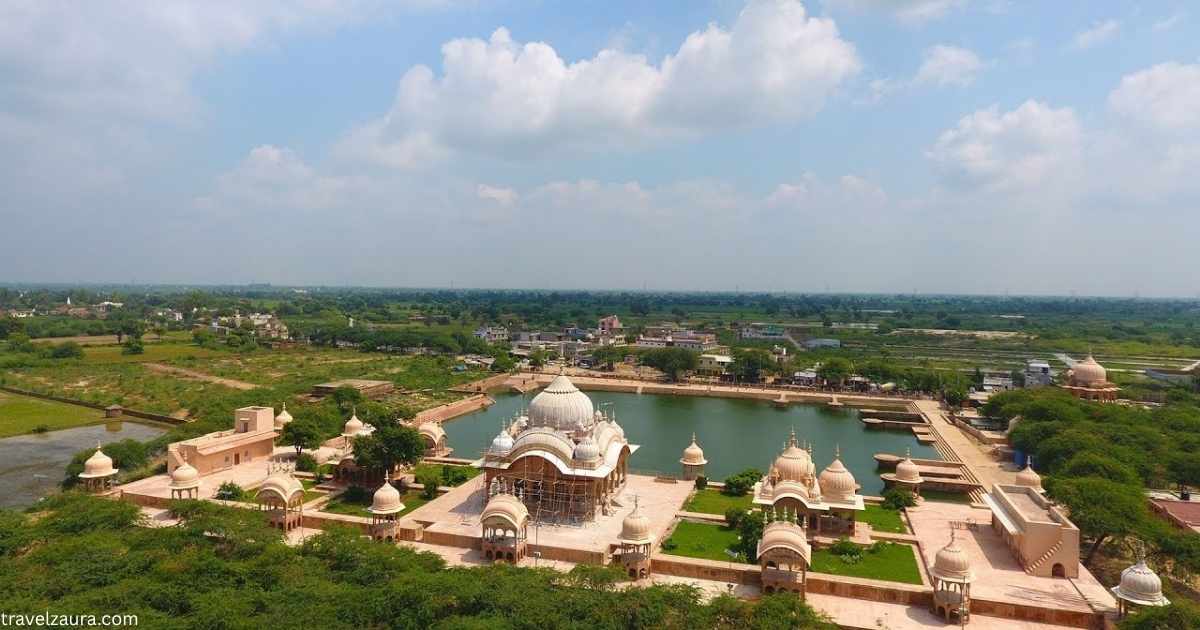
The Giriraj ji parikrama marg passes through numerous temples, kunds, and sacred spots. Each stop carries its own story rooted in Krishna’s leelas.
Walking past these sites in sequence adds deep meaning to the yatra. Below is the complete stop-by-stop breakdown.
Starting Point of the Parikrama
Most pilgrims begin at Daan Ghati Mandir, considered the traditional starting point of the parikrama. This temple marks where Krishna is believed to have collected tolls from villagers.
Badi Parikrama Route (Outer, 12 KM)
The Govardhan Badi Parikrama in km covers the outer 12 km stretch with major temple stops. This route suits pilgrims wanting a fuller devotional experience without the entire 21 km.
Daan Ghati Mandir
The starting temple where Krishna is said to have played as a toll collector with village girls.
Sankarshan Kund
A sacred water body associated with Balram, Krishna’s elder brother, offers a peaceful pause early in the route.
Poonchhri Ka Lautha
A quiet spot marking the tail-end curve of Govardhan Hill, less crowded than major stops.
Shrinathji Temple, Jatipura
Also known as Jatipura Mukharvind, this temple represents the face of Giriraj Maharaj and draws heavy devotional crowds.
Indraman Bhang
Believed to mark where Krishna humbled Indra’s pride, this site holds strong mythological significance.
Jatipura Temple Stop
A resting point near Jatipura where pilgrims often pause for prasad and water.
Chhoti Parikrama Route (Inner, 9 KM)
The Govardhan Parikrama km in the Vrindavan area often begins with this shorter inner loop. It suits families, elderly pilgrims, and those with limited time.
Lakshmi Narayan Mandir
A serene temple dedicated to Lakshmi and Narayan, popular for morning darshan.
Uddhav Kund
Named after Krishna’s close friend Uddhav, this kund is a peaceful meditation spot.
Radha Kund
One of the holiest kunds in Braj, believed to be created by Radha Rani herself.
Shyam Kund
Located beside Radha Kund, this pool is linked to Krishna’s slaying of the demon Aristasura.
Kusum Sarovar
A beautifully carved sandstone monument surrounds a sacred lake, popular for photography.
Kaan Wale Baba Stop
A small shrine known for its unique local legend among Braj pilgrims.
Mansi Ganga
A revered lake believed to have appeared from Krishna’s mind, used for ritual bathing before parikrama.
How to Reach Govardhan Temple
Reaching Govardhan is simple thanks to good road and rail connectivity from Mathura and Delhi. Most pilgrims combine this yatra with a Vrindavan or Mathura trip.
Planning transport in advance saves time, especially during festival season. Here are the main options.
You May Also Visit: Kashi Vishwanath Temple VIP Ticket Price 2026 Guide
By Road from Mathura, Delhi
Govardhan sits at a distance from Mathura (22 km) and around 170 km from Delhi via NH19. Regular buses and taxis connect both cities directly to Govardhan.
By Train via Mathura Junction
Mathura Junction is the nearest major railway station, well connected to major Indian cities. From there, taxis and autos reach Govardhan in about 40 minutes.
Nearest Airport to Govardhan
The nearest airport (Agra/Delhi) options both work well, with Agra closer at around 90 km. Delhi’s international airport offers more flight frequency for long-distance travellers.
Best Time to Visit Govardhan
The best time for parikrama is during cooler months when walking long distances feels comfortable. Weather plays a major role in how enjoyable your yatra turns out.
Festival timing also matters for those seeking a fuller spiritual experience. Choose your dates based on comfort or devotion level.
Best Months for the Parikrama
Winter months (October–March) offer the most comfortable walking conditions. Kartik month is especially auspicious and draws large numbers of devoted pilgrims.
Daily Timings to Avoid Crowds
Starting during early morning (4 AM–6 AM) helps you avoid both heat and heavy crowds. This is also the most spiritually charged time for the walk.
Busy Days vs Quieter Days
- Busy: Kartik Purnima, Govardhan Puja, weekends
- Busy: Guru Purnima, major festival dates
- Quieter: Weekdays outside festival season
- Quieter: Ekadashi and Amavasya in non-peak months
Parikrama Rules and Safety Tips
The parikrama rules exist to preserve the sanctity of this ancient walk. Following them respectfully enhances your spiritual experience.
Safety matters just as much as devotion, especially for vulnerable pilgrims. Review these tips before you begin.
Important Rules During Parikrama
- Walk only in the clockwise direction
- Avoid stepping on the hill itself, as it’s considered a deity
- Maintain silence or chant respectfully
- Carry your own water and snacks
Safety Tips for the Elderly and Children
Elderly pilgrims should consider the e-rickshaw option instead of the full walk. Children should stay within sight at all times amid festival crowds.
Packing Guide for the Parikrama
Packing right makes a huge difference over a 5- to 6-hour walk. A little preparation prevents most common discomforts along the way.
Keep your bag light but functional. Below is a quick checklist.
What to Carry on the Route
- Comfortable footwear or an option for barefoot walking
- Water bottle and light snacks
- Sunhat, sunscreen, and a small towel
- Cash for donations and prasad
- Basic first-aid items
Budget Breakdown for the Yatra
Most pilgrims complete this yatra on a modest daily budget. Costs stay low compared to other major pilgrimage circuits in India.
Understanding rough costs helps you plan without surprises. Here’s a simple breakdown.
E-Rickshaw and Taxi Costs
E-rickshaw rides for partial routes typically cost 200 to 500 rupees per person. Taxis from Mathura to Govardhan average 600 to 900 rupees one way.
Food, Water, and Offering Costs
Basic meals along the route cost 50 to 150 rupees, while offerings and prasad add another 100 to 300 rupees. A full day’s budget usually stays under 1,000 rupees per person.
Local Food Along the Parikrama Route
Small stalls near Daan Ghati Mandir and Radha Kund serve fresh kachori, jalebi, and lassi. Many stands also offer Chhappan Bhog-style thali during festival days for a small donation.
Hidden Gems on the Parikrama Marg
Beyond the famous kunds, quiet corners near Poonchhri Ka Lautha and Kaan Wale Baba offer peaceful moments away from crowds. These spots are perfect for reflection between major temple stops.
Rituals and Traditions of Parikrama
Pilgrims commonly chant Radhe Radhe or the Hare Krishna Mahamantra throughout the walk. Many also observe a Vrat (fasting) during the yatra as an added act of devotion.
Diya lighting and Tulsi offering at temple stops are common rituals along the route. These practices connect the physical walk to deeper spiritual intention.
History and Story of Govardhan Hill
According to legend, Krishna lifted Govardhan Hill on his little finger to shelter villagers from Indra’s storm. This event, set in the Dwapar Yuga, remains central to Braj folklore and devotion today.
Common Mistakes to Avoid
- Starting too late in the day and facing heat
- Skipping water and snacks
- Ignoring footwear comfort for barefoot walking
- Not checking festival crowd dates in advance
Govardhan Parikrama Route Map
A clear Govardhan Parikrama map helps pilgrims track major stops like Radha Kund, Mansi Ganga, and Daan Ghati Mandir. Local temple boards and tourism offices near Govardhan also distribute printed maps for visitors.
Govardhan Parikrama Marg Photos
Photos of the Giriraj Ji Parikrama Marg show scenic kunds, ancient temples, and pilgrims walking barefoot at sunrise. These images help first-time visitors visualize the route before their actual yatra.
Frequently Asked Questions
How many km is Govardhan Parikrama?
The Govardhan Parikrama in km measures approximately 21 kilometers total, covering the entire hill in one continuous, sacred, clockwise circuit around Giriraj Maharaj. (23 words)
How long does it take to complete Govardhan Parikrama?
Most pilgrims complete this Govardhan Parikrama in km journey within 5 to 6 hours, depending on walking pace, fitness, and rest stops. (22 words)
How to start Govardhan Parikrama?
Begin your Govardhan Parikrama in km yatra at Daan Ghati Mandir, the traditional starting point, then proceed clockwise past temples, kunds, and sacred stops. (24 words)
Is Govardhan Parikrama safe at night?
Night walks along the Govardhan Parikrama in km route are less common due to low visibility and fewer crowds. Early morning starts are safer overall. (24 words)
Can I do Govardhan Parikrama by car?
Cars aren’t permitted on the actual path. For the Govardhan Parikrama in km route, pilgrims use walking, e-rickshaws, or occasionally shared taxis nearby instead. (24 words)
Conclusion
The govardhan parikrama starting point at Daan Ghati Mandir marks the beginning of a sacred 21 km govardhan parikrama route around Giriraj Maharaj. Govardhan parikrama in km stretches through Radha Kund, Mansi Ganga, Kusum Sarovar, and Shrinathji Temple, rewarding pilgrims with a deep spiritual connection at every stop.
The govardhan parvat distance takes most walkers 5 to 6 hours, best completed during early morning hours or winter months for comfort. Shorter options like the Badi Parikrama (12 km) and Chhoti Parikrama (9 km) suit families and elderly devotees. The giriraj ji parikrama distance demands respect, silence, and a strict clockwise direction. Pack water, wear comfortable footwear, and start early for a smooth, blessed yatra around this holy hill.